“Trieste” by Davide ‘Dodo’ Oliva is licensed under BY-SA. Source: OpenverseThe view over the Gulf of Trieste, where Central Europe meets the Mediterranean.
I have lived in Trieste my whole life. I know the sudden chill of the Bora wind sweeping down the hills, the sharp smell of roasting coffee in the morning, and the precise moment the sun drops below the Adriatic horizon. People often ask what is special about this border town. The answer is found in its geography. We sit right on the edge of the Balkan Peninsula. The city is a historical hinge between the Mediterranean Sea and the former Austro-Hungarian Empire. The city name comes from the Roman settlement of Tergeste, meaning a place of the market. You feel this layered past in the architecture and the mix of languages spoken on the street.Trieste does not feel like the rest of Italy. The grand palazzos resemble Vienna more than Rome. It is a walking city, though you will definetely feel the incline once you leave the coast and head toward the old settlements on the hills. For those planning their days, our practical information guide breaks down the local transport network. Right now, I want to show you the specific locations that give Trieste its particular character.
The Heart of the City
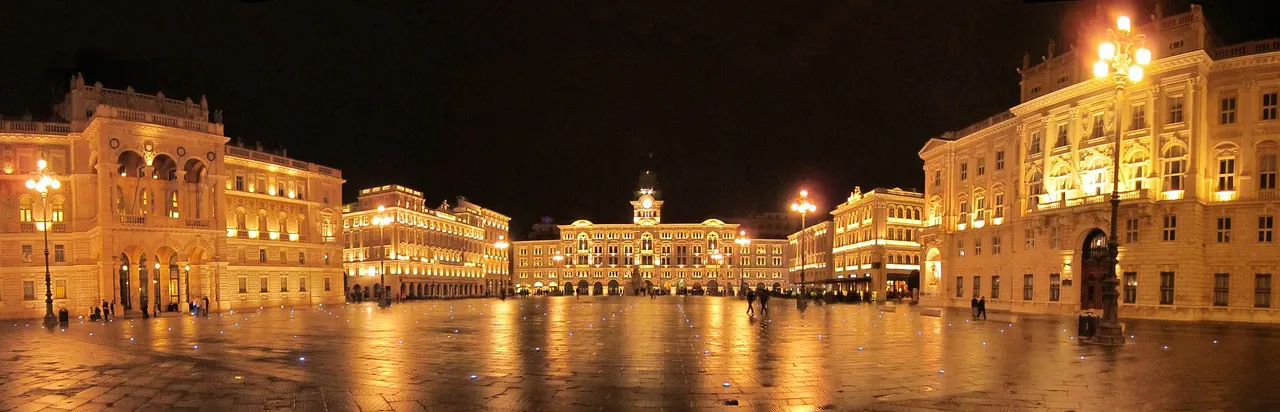
Piazza Unità d’Italia is the largest seaside square in Europe. You stand with your back to the grand municipal palaces and face the open water. The space is completely open. The Austrian architects who designed these administrative buildings wanted to project imperial power toward the sea. At sunset, the white limestone catches a pink light that reflects off the paving stones. Most visitors wander here instinctively upon arrival. There are cafes lining the perimeter where you can order an aperitivo and watch the ships pass.
Photo by mdm1979mdm on PixabayPiazza Unità d’Italia illuminated at night.
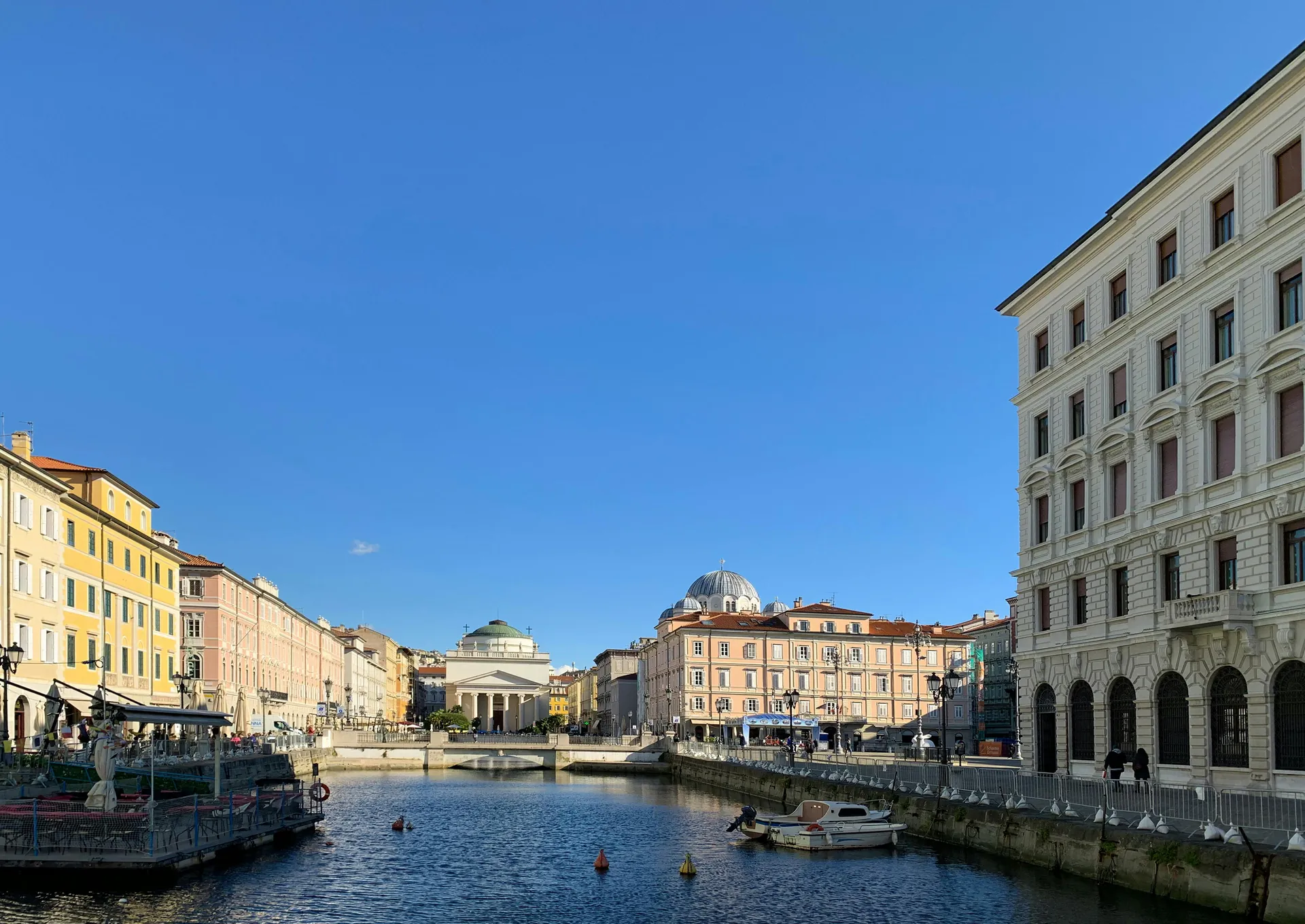
A few blocks away is the Grand Canal, or Canal Grande. Empress Maria Theresa ordered its construction so merchant ships could offload goods directly into the warehouses of the Borgo Teresiano district. Today, small wooden boats bob in the water while the Serbian Orthodox Church of Saint Spyridon is visible across the skyline with its blue domes. You can walk along the edges, cross the Ponte Rosso, and admire the statue of James Joyce. The Irish writer spent over ten years living here, teaching English and absorbing the melancholic atmosphere.
Photo by Valter Celato on PexelsBoats moored along the Grand Canal in the Borgo Teresiano.
The Molo Audace is a stone pier stretching two hundred meters directly into the gulf. It was named after the first Italian naval ship to arrive here at the end of the First World War. Walking out to the end is a local ritual.
When teh Bora wind blows, the sea turns wild and the walk down the pier becomes a physical challenge.
On calm days, it is simply a place to sit, watch the jellyfish drift in the clear water, and look back at the city profile.
Landmarks Quick Reference Guide
Landmark
Approximate Entry Fee
Best Time to Visit
Miramare Castle
€12 (Castle) / €8 (Park)
Early Morning
San Giusto Castle
€6
Late Afternoon
Grotta Gigante
€15
Midday
Museo Revoltella
€7
Weekdays
Historical and Cultural Highlights
Miramare Castle sits on a rocky promontory a few miles north of the center. Archduke Maximilian of Habsburg built this white limestone residence in the mid-nineteenth century for his wife, Charlotte of Belgium. The bright stone is a stark contrast against the deep blue sea and the surrounding botanical park. Inside, the rooms are preserved exactly as they were, down to the original wooden paneling that mimics the interior of a naval ship cabin. You can reach it easily by taking bus 6 from the city center. It is managed by the state and you can check current seasonal hours on the official Miramare Castle website.San Giusto Hill is the ancient core of Trieste. The Cathedral of San Giusto and the adjacent fortress contain layers of Roman and medieval history. The church floor incorporates mosaic pieces from a much older Christian basilica. The climb up the hill is steep. The reward is a panoramic view over the rooftops and the harbor. Just below the hill, right in the middle of modern streets, are the ruins of the Roman Theatre. You can see the semicircular stone seating right from the pavement on Via del Teatro Romano. The structure once held thousands of spectators facing the sea, which reached much further inland during antiquity.
Photo by Tibor Szabo on PexelsThe brilliant white facade of Miramare Castle against the Adriatic.
For art lovers, Museo Revoltella is housed in a nineteenth-century palace. Baron Pasquale Revoltella left his home and his vast art collection to the city. It has a superb collection of modern art, but the building itself, with its lavish period rooms and original furnishings, is equally fascinating. You can find their current exhibition calendar on the Museo Revoltella portal. Further along the coast is the Victory Lighthouse, or Faro della Vittoria. It is an active navigational aid and a towering memorial to those who died at sea during the First World War.We must also mention the Risiera di San Sabba. It is a former rice-husking facility that became a Nazi concentration camp during World War II. It is now a solemn National Monument and museum. Visiting this site is a sobering look at the darker chapters of our regional history. The concrete walls and preserved cells stand as a permanent reminder of the atrocities committed here.
Nature and Local Life
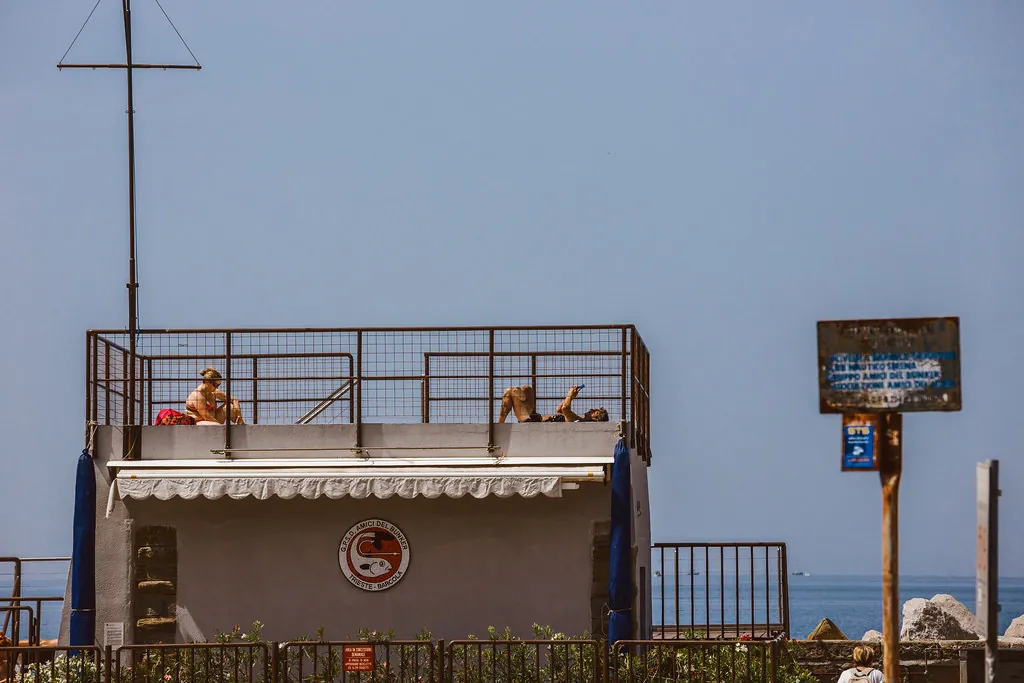
If you visit in the summer, you will notice that Trieste does not have traditional sandy beaches. Instead, we have the Barcola Promenade. This stretch of coast is lined with pine trees and paved platforms called topolini. This is the place all the locals go to. People bring their towels, lie on the concrete, and jump directly into the deep water. There are public showers and small kiosks selling cold drinks. Many travelers wonder if there are mosquitoes in Trieste during these warm months. They do exist near the parks, but the coastal breezes usually keep them at bay.
“Barcola, Trieste” by ::ErWin is licensed under BY-SA. Source: OpenverseThe coastal stretch near Barcola, a favorite local swimming spot.
Behind the city is the Karst Plateau. This limestone landscape is rugged, dry on the surface, and completely hollow underneath. The most famous underground site is the Grotta Gigante, a massive cavern that holds the record for the world’s largest show cave. It is an extraordinary geological formation with stalactites that have grown over millions of years. Information on visiting and guided descents can be found on the Grotta Gigante official site.While exploring the Karst, you should look for a hanging branch of ivy outside a farmhouse. This is the sign of an osmiza, a traditional pop-up tavern. By an ancient decree from the Austrian Emperor, local farmers are allowed to sell their own wine and cured meats directly to the public for a few weeks each year. Sitting on a wooden bench at an osmiza with a glass of Vitovska wine and a plate of locally smoked prosciutto is a deeply authentic experience. It also shows how close we are to our neighbors. You can easily cross the border from these hillside villages, making a day trip to the Slovenian coast highly accessible from Trieste.
The Coffee Houses and Local Cuisine
You cannot discuss Trieste without mentioning coffee. Our port has been importing coffee beans for centuries, and major brands like Illy were founded right here. Our cafes are grand, historic spaces with high ceilings and wood-paneled walls. Caffè San Marco and Caffè degli Specchi are institutions where writers like Italo Svevo used to work. You sit, order a capo in b (a macchiato served in a small glass), and read the paper.The food in Trieste is another reflection of our history. We do not rely on standard Italian pasta dishes. Our traditional meals include jota, a thick soup made of sauerkraut and pork, and gnocchi di susine, potato dumplings filled with plums and dusted with cinnamon. To eat like a local, you visit a buffet. These casual eateries serve boiled meats and sauerkraut straight from hot cauldrons. If you want to understand our culinary heritage, joining a guided food tour with local flavors is highly recommended. You can browse more options on our top activities page.
Official Resources and Practical Logistics
To help you plan the logistics of your trip, I recommend consulting a few official sources. The regional Turismo Friuli Venezia Giulia portal offers updated schedules for local events, museum openings, and regional alerts. For getting around, the Trieste Trasporti network provides accurate bus timetables, which you will definetely need if you plan to visit Miramare or the Karst villages without a car.Many visitors ask practical questions about daily life here. Tap water is sourced from mountain springs and is perfectly safe to drink, so carry a reusable bottle. Our geographical position means the weather can shift rapidly. The coldest months are January and February, which is when the Bora wind is most frequent. The best time of year to visit is late spring or early autumn, when the air is warm enough to sit outside at a cafe but not too hot to climb San Giusto Hill.