
Where to Stay
Comparing the Core Options
| Hotel | Neighborhood | Vibe | Estimated Price |
|---|---|---|---|
| Savoia Excelsior Palace (Hotels.com, Booking.com, Trip.com) | The Rive (Waterfront) | Classic Luxury, Historic | €250 – €450 |
| Grand Hotel Duchi d’Aosta (Hotels.com, Booking.com) | Piazza Unità d’Italia | Exclusive, Central | €300 – €500 |
| Hotel Continentale (Hotels.com, Booking.com) | Borgo Teresiano | Professional, Elegant | €160 – €250 |
| Urban Hotel Design (Trip.com, Hotels.com) | Città Vecchia | Modern, Artistic | €140 – €220 |
| Hotel Riviera & Maximilians (Hotels.com, Booking.com) | Barcola / Coast | Relaxed, Sea Views | €150 – €300 |
| Hotel Milano (Trip.com, Booking.com) | Train Station Area | Practical, Budget-Friendly | €80 – €130 |
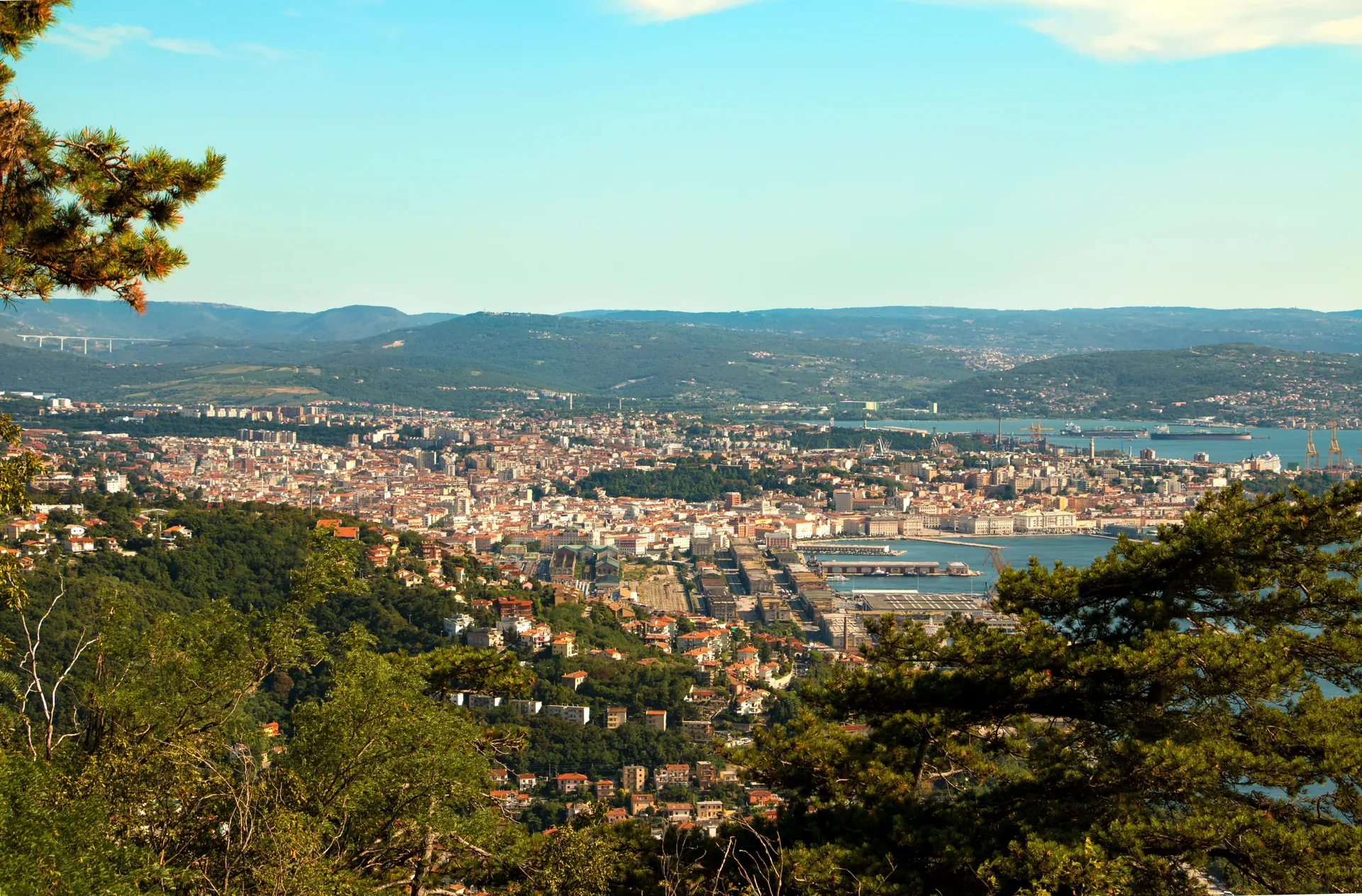
The Geography of a Stay in Trieste (and map)
Waking up in Trieste is a distinct experience. The light comes off the Adriatic Sea with a sharp, clear quality, reflecting against the white limestone of the karst plateau behind the city. I have lived here most of my life, and I still find the morning routine in this border town fascinating. You hear Italian, Slovenian, and German spoken over the clatter of espresso cups. Deciding where to rest your head is the first real choice you make about how you will experience our city. The specific street you end up staying at dictates your entire morning routine.
People often ask if Venice or Trieste is better. That is an impossible comparison. Venice is a spectacular, floating museum. Trieste is a working port city with a heavy literary past, a deep Central European soul, and a profound obsession with coffee. It is entirely worth going if you prefer a place that feels lived-in rather than curated for mass consumption. We do not have gondolas. We have the Bora, a fierce, cold wind that sweeps down from the mountains, particularly in January, which is our coldest month. We also have a rich tradition of retreating indoors to grand, historic cafes like Caffè San Marco to read, argue, and stay warm.
Because the city sits on a narrow strip of land between the Adriatic and the Slovenian border (which is only a few miles away), the neighborhoods are tightly packed. Trieste is a highly walkable city, though the streets climbing up toward the San Giusto hill will test your stamina. The center is generally divided into two main areas: Borgo Teresiano, the rational, grid-like district built by the Habsburgs, and Città Vecchia, the older, medieval quarter with winding alleys and Roman ruins.
Grandeur on the Waterfront (The Rive)
If you want to wake up, open your shutters, and look directly out at the Gulf of Trieste, you need to stay along the Rive. This long waterfront promenade is lined with monumental palazzos from the 19th century. Staying here puts you close to Piazza Unità d’Italia, the largest sea-facing square in Europe.
Savoia Excelsior Palace
The Savoia Excelsior Palace (Hotels.com, Booking.com, Trip.com) is the grand dame of Trieste hospitality. Built in 1911, it has a heavy Belle Époque atmosphere. The rooms have massive windows, heavy curtains, and original stucco work. It is the kind of place where aristocrats used to stay before boarding ocean liners to the Americas. Prices usually range from €250 to €450 a night in the summer. It is luxurious, quiet, and deeply traditional.
Grand Hotel Duchi d’Aosta
Located directly on Piazza Unità d’Italia, the Grand Hotel Duchi d’Aosta (Hotels.com, Booking.com) is the most prestigious address in town. You step out of the lobby and you are immediately standing in the center of the city’s civic life. The interior is darker, richer, and very private. It has an indoor pool that resembles a Roman bath. Expect to pay between €300 and €500 a night. It is a favorite for politicians, writers, and those who want total immersion in the city’s history.
In Trieste, a hotel room is not just a place to sleep. It is your private box seat for watching the Adriatic weather roll in and the city slowly wake up over a macchiato.
Borgo Teresiano: The Grid of Empire
In the 18th century, Empress Maria Theresa of Austria ordered the construction of a new commercial district. The result is Borgo Teresiano, a neighborhood defined by straight lines, elegant neoclassical facades, and the Grand Canal. This is the commercial heart of Trieste. Staying here means you are steps away from the best boutiques, traditional restaurants, and international banks. It is perfect for travelers who want order, wide sidewalks, and easy access to shopping while enjoying teh morning light reflecting off the canal.
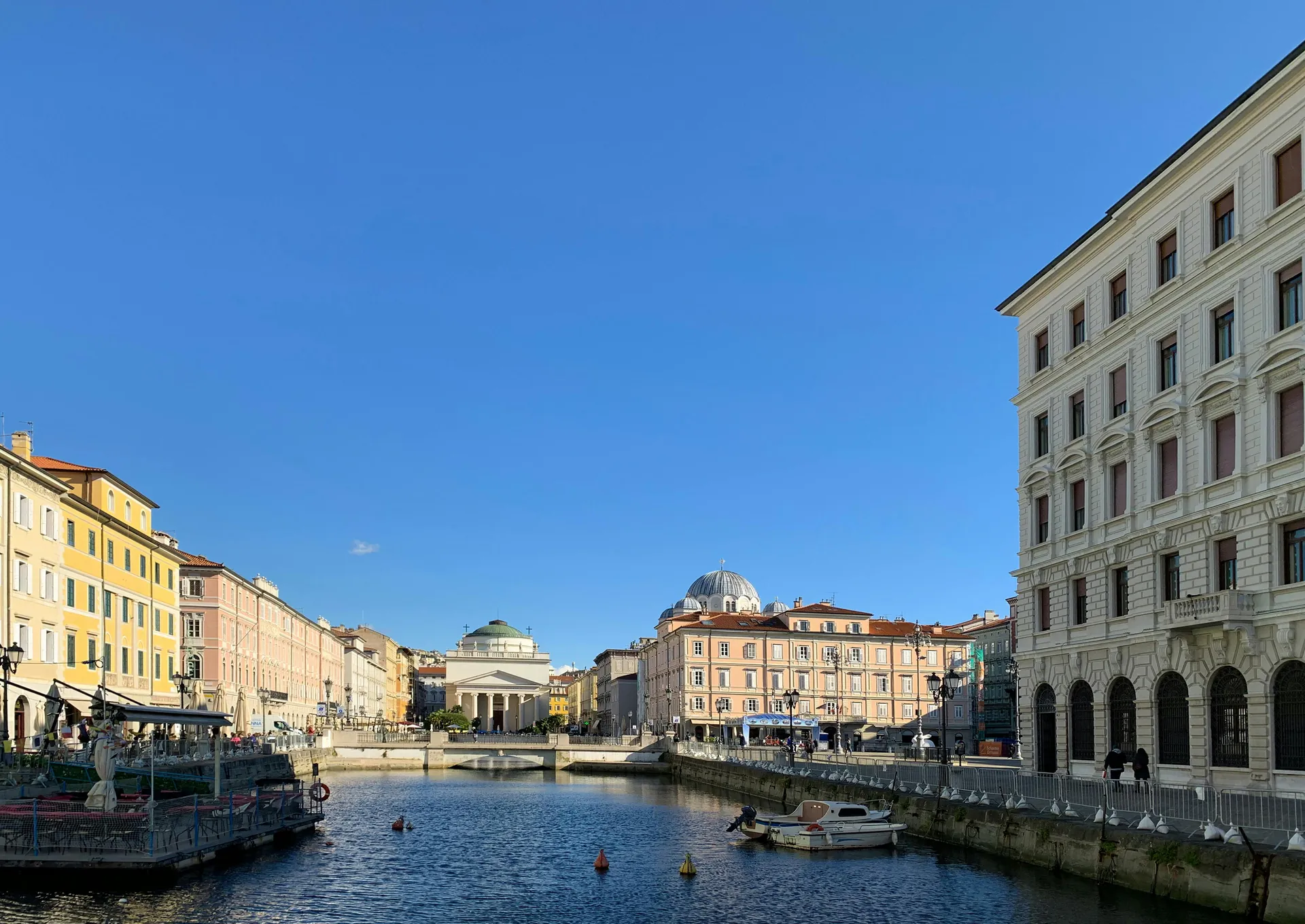
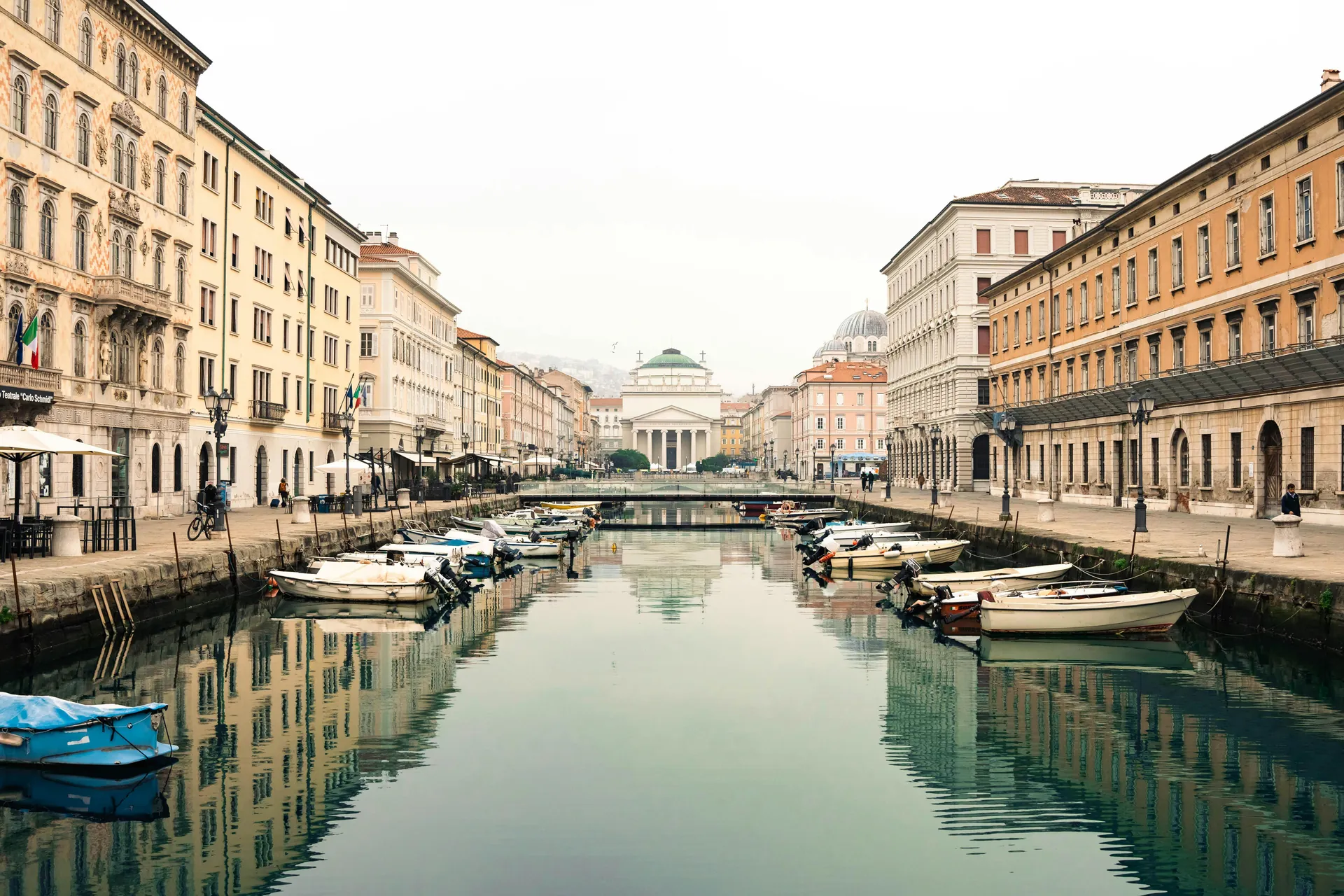
Hotel Continentale
Tucked away on Via San Nicolò, a pedestrian street lined with bookshops and cafes, the Hotel Continentale (Hotels.com, Booking.com) is an excellent mid-range to boutique option. The service is highly professional. The rooms are comfortable, leaning toward a classic, slightly restrained Italian style. It is an ideal base for a weekend of walking. Rooms generally run between €160 and €250.
Urban Hotel Design
If you prefer contemporary interiors, the Urban Hotel Design in Città Vecchia (Trip.com, Hotels.com) offers a sharp contrast to the surrounding historical architecture. The rooms are minimalist, featuring exposed stone walls mixed with modern glass fixtures. It sits right on the edge of the older, more bohemian district of Cavana. Rates are usually between €140 and €220.
Città Vecchia and Cavana: The Bohemian Core
Città Vecchia (the Old Town) and the adjacent Cavana district are where the neat Habsburg grid dissolves into narrow, erratic streets. This area was once considered rough, but it is now the most dynamic part of the city. It is filled with small wine bars, independent art galleries, and small trattorias. James Joyce lived in this area during his time in Trieste, and you can still feel a bit of that early 20th-century artistic chaos.
Accommodations here lean heavily toward boutique guesthouses and apartment rentals. Renting an apartment in Cavana is a brilliant way to experience the city like a local. Just be aware that many of these older buildings do not have elevators. If you are staying in an apartment, you have the flexibility to visit the local markets, buy some fresh fish, and cook at home. You can easily spend your days taking a Trieste food tour with local flavors or simply wandering from cafe to cafe.
Coastal Escapes: Miramare and Barcola
If you visit between May and September, you might want to stay outside the immediate city center. The coastal road leading north toward Miramare Castle runs through Barcola, a neighborhood where locals go to sunbathe on the concrete terraces and swim in the Adriatic. The best time of year to visit Trieste is late spring or early autumn, when the sea is warm but the heavy summer heat has faded.
The Hotel Riviera & Maximilians (Hotels.com, Booking.com) is located right on the coastal road. It offers private beach access and unobstructed views of the gulf. Staying here gives you a resort-like experience while keeping you only a ten-minute bus or taxi ride from Piazza Unità. It is a romantic, quiet alternative to the downtown area. Rates typically range from €150 to €300.

Budget and Transit-Friendly Logistics
For those prioritizing practical travel, the area around the Trieste Centrale train station is the logical choice. It is safe, flat, and highly convenient if you are carrying heavy luggage or planning multiple excursions. From the station, you can easily catch a train to Venice or take a guided day trip to Postojna Cave and Predjama Castle across the border in Slovenia.
The Hotel Milano (Trip.com, Booking.com) is a solid, no-nonsense option just a few blocks from the station. It lacks the historic romance of the waterfront properties, but it makes up for it with clean rooms, reliable Wi-Fi, and excellent rates, usually between €80 and €130 a night. It is a smart base camp for regional exploration.
Practical Details for Your Stay
Before you finalize your booking, you should keep a few practicalities in mind. Trieste is a safe and hospitable city, but understanding the local rhythms will make your stay much smoother.
- Traffic and Parking: A large portion of the city center is designated as a ZTL (Zona a Traffico Limitato). This means only residents with permits can drive in these areas. If you are renting a car, you must verify with your hotel if they offer parking or can register your license plate to avoid heavy fines.
- Tap Water: You can drink the tap water in Trieste. It comes from the surrounding karst and is clean, cold, and entirely safe.
- Mosquitoes: Are there mosquitoes in Trieste? Yes, during the summer months, particularly if you are staying near the coast or in an apartment with open windows. Most hotels have air conditioning and screened windows, but if you are sitting at an outdoor cafe in the evening, you will want some repellent.
- Local Etiquette: Many visitors worry about Italian dining rules. You might have heard of the “spaghetti rule” (never cut or break your pasta) or the “golden rule” (no cappuccino after 11 AM). While locals absolutely observe these traditions, we are a border city used to international visitors. No waiter will scold you, but ordering an espresso after dinner instead of a milky coffee will earn you a quiet nod of respect.
- Tipping: Is it rude not to tip in Italy? Service is generally included in the bill (look for “coperto” or “servizio”). Leaving a few extra euros on the table for exceptional service is appreciated, but a large percentage-based tip is not expected or required.
My favorite local tip: if you want to escape the city for an afternoon, head up into the Karst plateau and find an osmiza. These are temporary farm taverns where local families sell their own wine, cured meats, and cheeses. Look for a branch of ivy hanging at a crossroads to point the way.
Elena Valli
Search for Accommodations
Use the tool below to check current availability and compare rates across the different neighborhoods of Trieste.
Once you have secured your room, you can begin planning your daily itineraries. Take a look at our guide to the best places to visit in the city, from the Roman amphitheater to the sweeping grounds of Miramare Castle. If you are flying into the region and need to figure out how to reach your hotel, read our comprehensive transport and practical info guide.