
Kleine Berlin
The Dual Topography of Trieste
Trieste is a city that demands you look at it in layers. We spend our days gazing at the Adriatic Sea or leaning into the intense Bora wind as it whips across Piazza Unità d’Italia. We warm up with dark espresso at Caffè San Marco, surrounded by the ghosts of writers and intellectuals. We argue about politics, poetry, and the shifting borders of our region. The surface of Trieste is elegant, complicated, and entirely exposed to the elements. Down below, the limestone holds a much darker memory.
Kleine Berlin is the largest underground air-raid shelter complex in Trieste. It is a somber physical record of the Second World War, a subterranean network carved out of necessity and fear. Most visitors to the city walk directly over it without realizing it is there. The entrances blend into the urban fabric near the courthouse and the university. You only find them if you know exactly where to step off the main avenues.

September 1943 and the Adriatisches Küstenland
To understand why this massive complex exists, you have to look at the geopolitical collapse of 1943. Following the Italian armistice in September of that year, German forces rapidly occupied Trieste. They folded the city, along with the surrounding regions, into the Operational Zone of the Adriatic Littoral (Operationszone Adriatisches Küstenland). Trieste was a strategic prize. It had a massive deep-water port, extensive railway connections to Central Europe, and shipyards capable of producing military vessels.
This strategic value made the city a primary target for Allied bombing raids. Bombers flying from bases in southern Italy routinely targeted the rail yards and the industrial sectors. The civilian population and the occupying military forces both needed immediate protection from the sky. The German authorities initiated the construction of a vast shelter system directly into teh limestone hill of Scorcola.
The name “Kleine Berlin” (Little Berlin) was actually coined by the local Triestine population. It was a dark joke about the sudden, heavy concentration of German military personnel in the city, and the rumor that the subterranean complex was so massive and self-sufficient that it resembled the German capital underground.
The Architecture of Survival
The layout of Kleine Berlin is sharply divided, reflecting the hierarchy of the occupation. The complex consists of two distinct but interconnected sectors: an Italian civilian sector and a German military sector. The differences in their construction are striking and deeply unsettling to witness in person.
The Italian civilian sector, accessed primarily from Via Fabio Severo, consists of a series of wide, parallel galleries. The local authorities constructed this side to house thousands of citizens during the raids. It is rough-hewn. The walls are bare Karst rock. Because water constantly seeps through the porous limestone, the humidity in these civilian tunnels is incredibly high. There were wooden benches along the walls, a rudimentary first-aid station, and very little else. When the sirens wailed, families rushed down here to wait in the cold, damp darkness.
The German military sector, also accessed from Via Fabio Severo, is entirely different. German engineers constructed this network using forced labor. The tunnels are narrower but fully lined with thick concrete. This lining prevented the constant water seepage, keeping the environment dry enough to store munitions and sensitive equipment. The military sector had a proper ventilation system, chemical toilets, and independent electrical generators. It was a fortified operational base, completely sealed off from the civilian panic happening just a few meters away.
“The damp smell of the limestone never leaves you. It is the scent of a city holding its breath in the dark.”
Elena Valli
The Trieste Underground Experience
Entering Kleine Berlin today is a sensory shock. You leave the bright, sunny streets of the city center and step into an environment that feels permanently frozen in the 1940s. The temperature drops immediately. It remains a constant 12 to 15 degrees Celsius year-round, regardless of whether you visit during the height of summer or the dead of winter.
As you walk deeper into the complex, you start noticing the details. The floor is uneven, covered in a fine layer of damp clay and calcium deposits. In the Italian sector, nature is slowly reclaiming the space. Decades of dripping water have formed small stalactites on the ceilings and walls. The silence inside is heavy. It absorbs sound entirely.
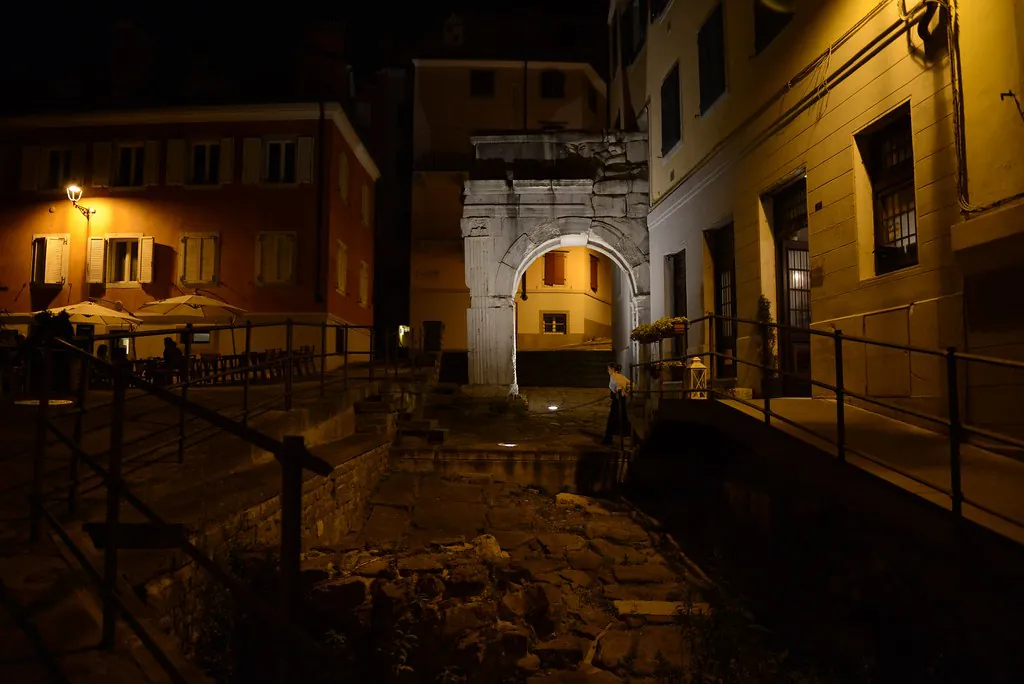
In the German sector, you can still see the original, painted signs on the concrete walls. Black Gothic script indicates the direction to the exits, the locations of the latrines, and the rules for maintaining blackout conditions. Rusted remnants of the original ventilation pipes still hang from the ceiling. There are small exhibition spaces set up in some of the wider galleries, displaying artifacts recovered from the tunnels: rusted gas masks, helmets, original newspapers, and personal items dropped in the panic of the raids.
Emerging into the Light: Post-War Evolution
After the war ended in 1945, the tunnels fell into total obscurity. The Allied Military Government briefly used parts of the complex for storage, but eventually, the entrances were sealed. Kleine Berlin flooded. The city above tried to move on from the trauma of the occupation, and the underground city was left to the dark.
It stayed that way until the late 20th century. A dedicated group of local speleologists from the Club Alpinistico Triestino (CAT) gained permission to explore the sealed tunnels. What they found was a flooded, muddy ruin. They spent years pumping out the water, clearing tons of debris by hand, and slowly restoring safe access. The volunteers of CAT are the sole reason you can walk through the complex today. This is the exact history that the local volunteers want to take care of.
Practical Logistics for Visitors
Because Kleine Berlin is managed entirely by volunteers, you cannot simply buy a ticket at the door on any given Tuesday. The site is open exclusively through guided tours organized by the Club Alpinistico Triestino. They usually open the complex on the last Friday of every month, though special openings happen occasionally. You must check the schedule on the Kleine Berlin Official Site to confirm tour times.
| Category | Details |
|---|---|
| Access & Booking | Guided tours only. Reservations are mandatory via the official CAT website. |
| Entry Fee | Typically a small contribution (around €5–€10) to support the volunteer restoration work. |
| Temperature | Constant 12-15°C (53-59°F) with very high humidity. A warm jacket is required, even in August. |
| Accessibility | The terrain is muddy and uneven. Sturdy, closed-toe footwear is mandatory. The site is unfortunately not suitable for wheelchairs or those with severe mobility issues. |
If you are trying to understand the broader layout of the city before you go underground, booking a Private Trieste Sightseeing Tour is an excellent way to get your bearings. You will walk the elegant Austro-Hungarian avenues and see the physical distances between the historic port and the hills where the bunkers were carved. For those who prefer independent exploration, downloading a Trieste Walking Tour with Audio and Written Guide by a Local lets you set your own pace through the historic center before heading up Via Fabio Severo to the bunker entrance.
Connecting the Historical Dots
Trieste is a deeply layered city, and understanding its WWII history requires visiting more than one site. Kleine Berlin tells the story of the air raids and the daily survival of the civilian population. To understand the darker, more brutal reality of the German occupation, you must visit the Risiera di San Sabba. Located just outside the city center, it was a former rice-husking plant converted into a police transit camp. It is the only site of its kind in Italy with a crematorium. Together, these two locations form a complete, harrowing picture of Trieste during the 1940s.
Kleine Berlin is not a museum. It is a physical wound in the limestone of the city.
After confronting the heavy realities of the underground, you will likely need a moment to decompress. Many locals head up to the Karst plateau above the city. The contrast between the damp tunnels and the bright, wind-swept plateau is sharp. We look for a branch of ivy hanging outside a farmhouse—the traditional sign of an osmiza. These temporary taverns sell house-made wine and cured meats. Sitting at a wooden table, drinking a glass of cold Vitovska wine, and looking down at the Gulf of Trieste is the best way to return to the present moment.
For more information on navigating the city’s historical sites and current exhibitions, the Trieste City Museums portal is a highly reliable resource. If you are planning a broader itinerary, the Visit Trieste official tourism board maintains updated schedules for regional transport. You can also find detailed bus route information on our Practical Info page to help you get from the city center to the surrounding hills.
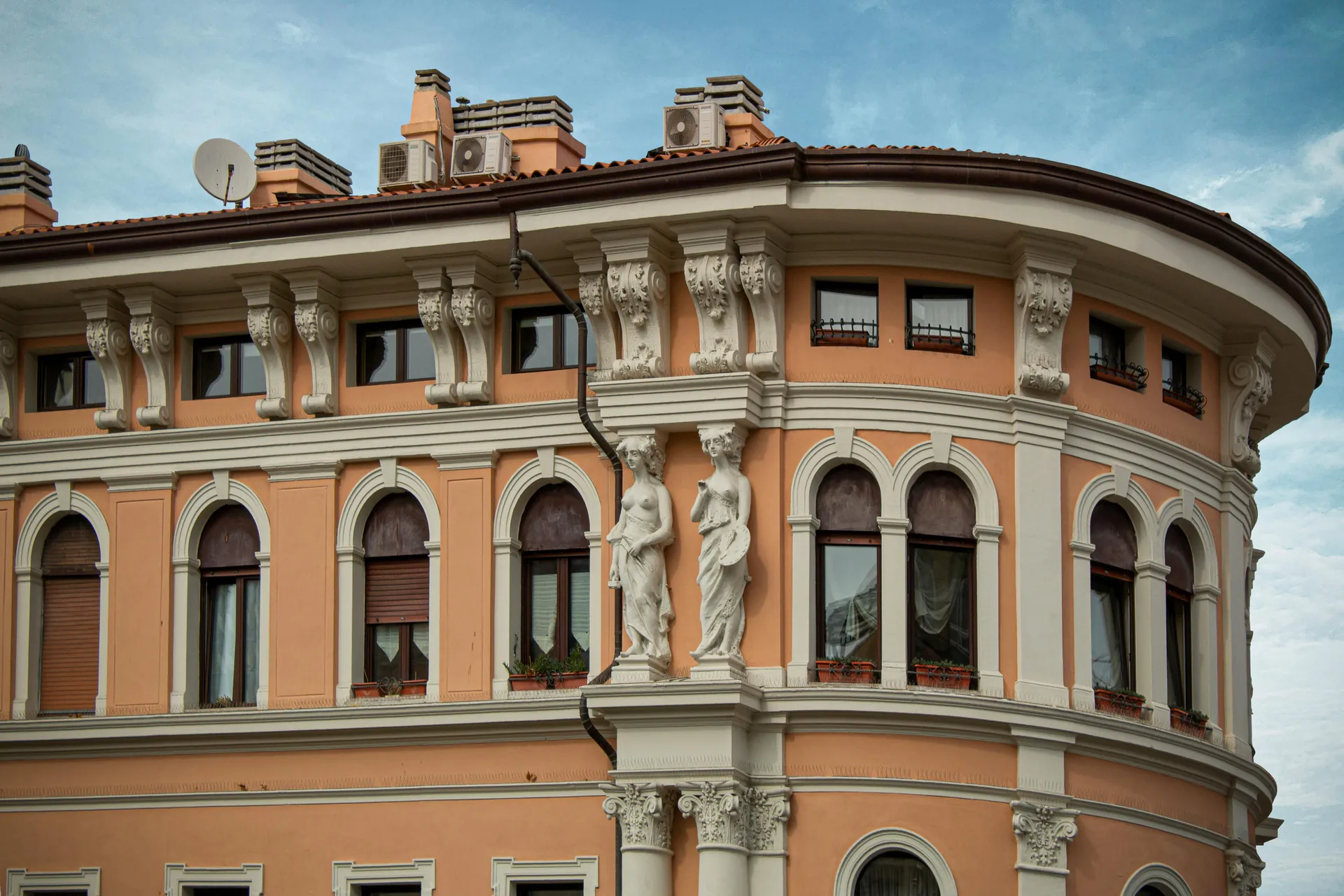
Trieste is a walkable city above ground, but the subterranean network reminds us of the fragility of that surface beauty. January is the coldest month in Trieste, bringing the biting Bora wind, but down in Kleine Berlin, the damp chill remains entirely unchanged by the seasons. The tunnels are a physical record of survival, a labyrinth of fear and engineering, and a vital piece of the city’s complex identity.