
City Sightseeing Tours

Trieste Walking Tour with Audio and Written Guide by a Local
⭐ Trieste Experience
🔥 Bestseller in 2026

Private Trieste Sightseeing Tour
⭐ Private Experience
🔥 Booked 9 times today

Trieste Bus Tour with Audio Guide
⭐ Trieste Experience
🔥 Over 217 reviews – Verified quality

Trieste Private Walking Tour with a Local
⭐ Trieste Experience
🔥 Bestseller in 2026

Panoramic Tour of Trieste and Miramare Castle
⭐ Panoramic Experience
🔥 Exceptional 4.9/5 rating

Trieste E-Bike Tour: Old Town, Miramare Castle and Gelato
⭐ Trieste Experience
🔥 Booked 5 times today

Trieste Hidden Gems Private Guided Walking Tour
⭐ Trieste Experience
🔥 High demand: 13 people viewed today

Trieste Cultural Walking Tour
⭐ Trieste Experience
🔥 Booked 7 times today
Trieste 24-Hour Hop-On-Hop-Off Tour
⭐ Trieste Experience
🔥 Instant confirmation after booking
Booking Your Experience: Platforms vs. the Ticket Counter
Organizing a trip to a border city requires a bit of foresight. When friends visit me here in Trieste, we always have a practical conversation about how to book local experiences. There is an ongoing debate between using major booking platforms and buying tickets directly at the municipal counters. Both approaches have merit. I want to lay out the realities of each so you can decide what makes sense for your schedule.
The Case for Tour Platforms
Many experienced travelers default to platforms like Viator, GetYourGuide, or Headout. The primary draw is free cancellation. International travel plans shift constantly, and knowing you can back out of a walking tour 24 hours in advance brings peace of mind. These platforms also guarantee English-speaking customer support and certified guides. You will often find package deals that bundle museum entries with hotel transfers. This skip-the-line access is highly valuable during the peak summer months when queues stretch across the pavement.
The Official Route
You might prefer buying tickets directly from the source. This is a valid choice and usually the cheapest option. If you buy an entry pass at the physical gate or via a local municipal website, you avoid third-party service fees. The trade-off is flexibility. Official tickets are generally non-refundable. You might also encounter language barriers at the ticket office, and you will not get the bundled extras like a local historian walking you through the site. It is a straightforward transaction for those who want to explore entirely on their own terms.
Why See Trieste by Tour?
Trieste is an architectural anomaly in Italy. The city is defined by heavy neoclassical facades left behind by the Austro-Hungarian Empire, rather than the Renaissance arches you find further south. Visitors frequently ask if the city feels more Italian or Slovenian. It is distinctly Italian, yet the Slavic influence anchors the local culture. Exploring this intersection is best done with someone who knows the streets. A guided tour helps contextualize the heavy history, the intense local winds, and the quiet melancholy that defines this stretch of the Adriatic coast.
The Hop-On Hop-Off Bus and City Walkability
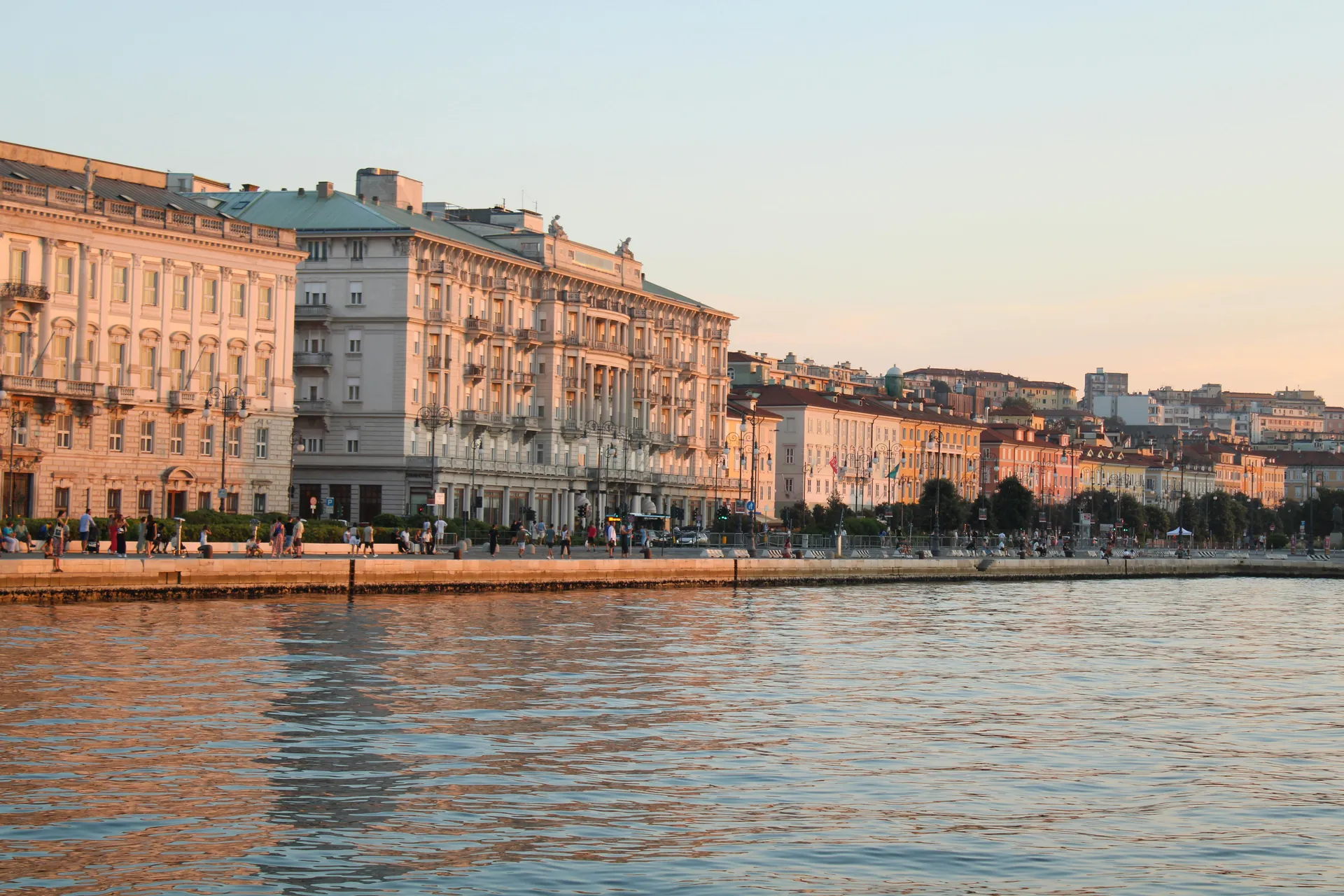
People often wonder if Trieste is a walkable city. The historic center around Piazza Unità d’Italia is entirely flat and easy to navigate on foot. The surrounding neighborhoods climb sharply up the karst hills. The red hop-on hop-off bus is a practical solution for the elevation changes. It departs regularly from Molo Audace on Riva 3 Novembre. The route takes you past the Roman theater and up to the Faro della Vittoria lighthouse. You get an elevated view of the waterfront without the physical strain of climbing the steep alleys behind the old town.
Walking the Borgo Teresiano and Literary Quarters
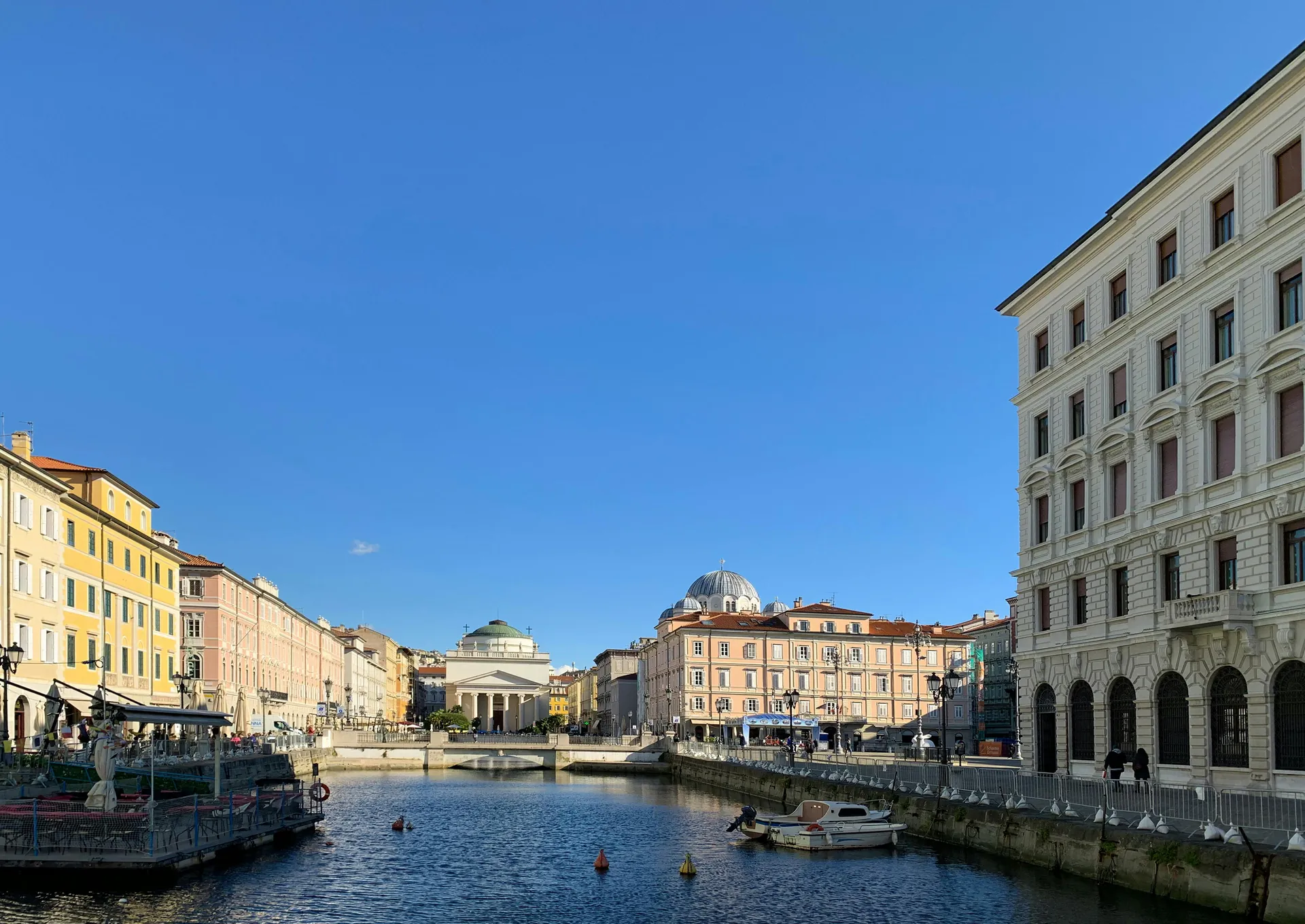
A walking tour through the Borgo Teresiano reveals the commercial heart of the 18th century. The Grand Canal cuts directly into the city grid, reflecting the pale stone buildings on the water. Guides usually lead groups through the narrow streets of the old Jewish Quarter. You learn about the literary figures who walked these same paving stones. James Joyce lived here for a decade, writing parts of Ulysses at local tables. Italo Svevo and Umberto Saba are equally celebrated. Navigating teh tight corners of these historic blocks with a local historian completely changes how you perceive the city.

Coffee Culture and the Historic Cafés
You cannot understand this city without understanding its coffee. We are the coffee capital of Italy, and the major port for green coffee beans entering the continent. Specialized coffee tours focus on the historic venues. A standard itinerary includes a stop at Caffè San Marco on Via Cesare Battisti. The interior retains its 1914 secessionist style. You sit at marble tables while the guide explains the specific vocabulary we use to order espresso here. A “capo in b” is a macchiato served in a small glass. Learning these terms makes you feel slightly less like an outsider.
Miramare Castle: The Habsburg Legacy
If you ask a local what you should see first, the answer is always Miramare. Archduke Maximilian of Habsburg built this white castle on a rocky promontory overlooking the sea. It is an intense, slightly tragic place. The official Miramare website offers basic entry tickets, but guided tours provide necessary context about Maximilian’s ill-fated expedition to Mexico. The interior rooms are preserved exactly as they were in the 1860s. The surrounding botanical park is free to enter and features exotic tree species imported by the Archduke himself.

Maritime Sightseeing and the Delfino Verde
Viewing the skyline from the Adriatic Sea is a completely different experience. Boat tours depart from Molo Audace, the long stone pier jutting out from the main square. Some travelers debate whether Venice or Trieste is better for a coastal getaway. Venice is undeniably grand and commands your attention. Trieste is quiet, imposing, and demands a slower pace. The public ferry service, known as the Delfino Verde, runs across the gulf to the small fishing village of Muggia. It acts as an unofficial sightseeing cruise for a fraction of the cost of a private charter.
The Grotta Gigante Excursion
Just outside the city limits lies the tourist cave with the largest room in the world. The Grotta Gigante is a massive cavern hidden beneath the limestone plateau. Guided tours are mandatory due to the sheer scale and the 500 steps required to reach the bottom. The temperature inside drops dramatically, even in the middle of August. It is an unusual sight that highlights the complex geology of the surrounding region. Many tour companies bundle transport from the city center with the cave admission ticket.
Evening Tours and the Osmiza Tradition
As the sun sets, the focus shifts to food and wine. Evening tours frequently explore the local Spritz culture. We use white wine instead of Prosecco for our Spritz. True immersion requires a trip up to the karst villages to visit an osmiza. These are private farmhouses permitted to sell their own wine and cured meats for a few weeks each year. You sit on wooden benches under grapevines, eating hard-boiled eggs and drinking local Vitovska wine. It is a deeply regional tradition that guided food tours can help you access.
Ticket Types & Pricing
| Tour Type | Average Price | Best For |
|---|---|---|
| Hop-On Hop-Off Bus | €15 – €20 | City Highlights & Elevation |
| Miramare Castle Entry | €10 – €12 | History Buffs |
| Guided Walking Tour | €25 – €40 | Deep Cultural Context |
| Grotta Gigante Excursion | €12 – €15 | Geology Enthusiasts |
| Delfino Verde Ferry | €5 – €9 | Budget Maritime Views |
Practical Tips for Tour-Goers
Timing your visit requires careful planning. The coldest month is January, when the Bora wind routinely sweeps down from the plateau at aggressive speeds. The wind is a central part of life here. It is an environment you will want to prepare for. The best touring months are May and September. Summer brings heavy humidity and mosquitoes, so pack repellent if you plan to walk the castle gardens at dusk. The local tap water is exceptionally clean and comes from underground karst aquifers, so bring a refillable bottle for your excursions.
Local Tip: Do not tip aggressively. In Italy, service is generally included. Leaving a coin or two on the bar after a coffee is a polite gesture, but leaving 20 percent on a guided tour or a restaurant bill is entirely unnecessary.
Before you book your itinerary, take a look at our Places to Visit guide to understand the layout of the historic monuments. If you need details on public transport schedules or parking near the departure points, our Practical Info page covers the logistics of moving around the region.