
Grotta Torri di Slivia
The Subterranean Reality of the Carso
Trieste is a city defined by its extreme edges. We have the Adriatic Sea stretching out at our front door and the rugged, unyielding limestone plateau of the Carso pressing against our back. Visitors often arrive and ask what is special about Trieste. They wander through Piazza Unità, order a coffee at Caffè San Marco, and admire the grand Austro-Hungarian architecture. The true nature of teh border region is actually underground. The earth here is entirely hollow. Water has spent millions of years carving a vast network of caverns, sinkholes, and subterranean rivers through the rock. Grotta Torri di Slivia is one of the most profound places to witness this ancient geological reality. It is a space that puts human history into sharp perspective.
The Bora wind howls across this landscape in winter, stripping the branches bare and pushing the sea into a frenzy. Below ground, a silent and continuous process of creation remains completely undisturbed. We locals know Grotta Torri di Slivia simply as the cave of the towers. It is a physical manifestation of time. The drops of water fall from the ceiling at intervals you can almost set a watch to. Each drop deposits a microscopic fraction of calcite. The resulting formations take thousands of years to gain a single inch in height.
To understand Trieste, you must leave the grand piazzas behind and go underground. The real history of this borderland is written in the dark.
Geological Weight and The Towers
The Trieste Karst is essentially a porous sponge of rock. You can read more about the broader geological context of our region on our Practical Info page. Grotta Torri di Slivia plunges approximately 80 meters deep into this limestone heart. The descent is immediate and absolute. You leave the bright Mediterranean light behind very quickly. The smell of damp earth replaces the scent of wild fennel and pine that dominates the surface. This sensory shift defines the entire experience.
The name of the cave comes from the colossal stalagmites rising from the floor like natural monuments. Some of these formations are several meters high. The main chamber has the distinct atmosphere of a cathedral. It commands total silence from those who enter it. The weight of the rock above you is palpable. You are standing inside a void created by the slow, patient artistry of water. The sheer scale of the space makes the human visitors seem entirely insignificant.
A History of Shadows
Farmers in the village of Slivia knew about the cave entrance for generations. It was a natural cavity they called “Pejca v Lascu” in the local Slovenian dialect. People often ask if Trieste is more Italian or Slovenian. The answer is written in the landscape itself. The urban center speaks Italian, while the villages of the Carso hold deep Slavic roots. Slivia is a prime example of this duality. The entrance to the cave was a local landmark long before scientists took an interest in it.
Formal exploration began in the late 19th century. Trieste was the undisputed cradle of modern speleology during the Austro-Hungarian era. Men descended into these abysses using primitive hemp ropes and candlelight. The Società Speleologica Italiana maintains extensive archives detailing how these early explorers mapped the 101-meter descent. They faced total darkness and unknown depths. The maps they drew by hand are still incredibly accurate today. Modern visitors benefit from safe steel staircases and careful lighting, but the foundational shape of the cave remains exactly as those pioneers first saw it.
The Ecosystem of the Deep
A cave is not a dead space. It is a highly specialized ecosystem. Grotta Torri di Slivia is home to life forms that have adapted to total darkness over millennia. There are blind cave beetles and unique species of spiders that navigate purely by touch and vibration. The guides are deeply protective of this environment. They point out the delicate biological balance that exists just out of sight.
Access is strictly managed to protect the delicate calcite growths and the micro-fauna. You cannot wander in alone. Guided tours are mandatory and typically last between 60 and 90 minutes. This rule exists to prevent human interference from destroying thousands of years of natural progress. The oils from human skin stop the growth of stalagmites instantly. Touching the formations is strictly prohibited. It is a rule that visitors must respect without question.
Visitor Logistics and Practicalities
Planning your visit requires a bit of foresight. The cave operates on a seasonal schedule. You must check the official Grotta Torri di Slivia website for the exact opening hours before you drive up to the Carso. During the peak summer months, tours fill up quickly. Booking your tickets in advance is the only way to guarantee entry.
| Category | Details |
|---|---|
| Opening Hours | Seasonal (Verify on official site) |
| Adult Ticket | €16.50 |
| Reduced (Children 4-11) | €9.00 |
| Tour Duration | Approx. 60-90 minutes |
If you are planning a comprehensive itinerary and wondering how to spend a day in Trieste, combining a morning in the city center with an afternoon exploring the Slivia cave is a deeply authentic choice. For those who prefer structured logistics, booking a Private Trieste Sightseeing Tour in the morning pairs perfectly with an independent drive up to the Karst in the afternoon. Alternatively, if you are arriving from out of town, a Small-Group Transfer from Trieste City can help manage the wider regional distances.
What to Bring
The temperature inside Grotta Torri di Slivia is between 6°C and 9°C (43-48°F) regardless of the season. A light jacket is mandatory even if it is 35°C outside. Sturdy, non-slip footwear is required. The ground is damp, and the metal grating on the stairs is slick. Tourists often ask if there are mosquitoes in Trieste. Up on the surface in summer, yes, you will want repellent. Down in the cave, the air is too cool and the environment too harsh for them. You are completely insulated from the surface pests.
Accessibility
The path down into the cave involves steep stairs and consistently uneven terrain. It is a physical descent into the earth. The site is not suitable for strollers, wheelchairs, or individuals with severe mobility limitations. You must be comfortable walking up and down hundreds of steps in a humid environment. Review your physical limits before purchasing a ticket.
Photography in the Dark
Capturing the scale of Grotta Torri di Slivia on camera is notoriously difficult. The artificial lighting is intentionally kept low to prevent the growth of lampenflora—green algae that damages the ancient rock. Flash photography washes out the delicate textures of the stalagmites and ruins the atmosphere for other visitors in your group. You need a camera with excellent low-light capabilities. Modern smartphones do an adequate job, but a proper sensor is necessary to realy capture the depth of the main chamber. Pay attention to the dampness in the air. Condensation forms quickly on cold lenses when you transition back to the warm surface air. Make sure you bring a microfiber cloth to protect your gear from the limestone that water drips from.
Extending Your Exploration
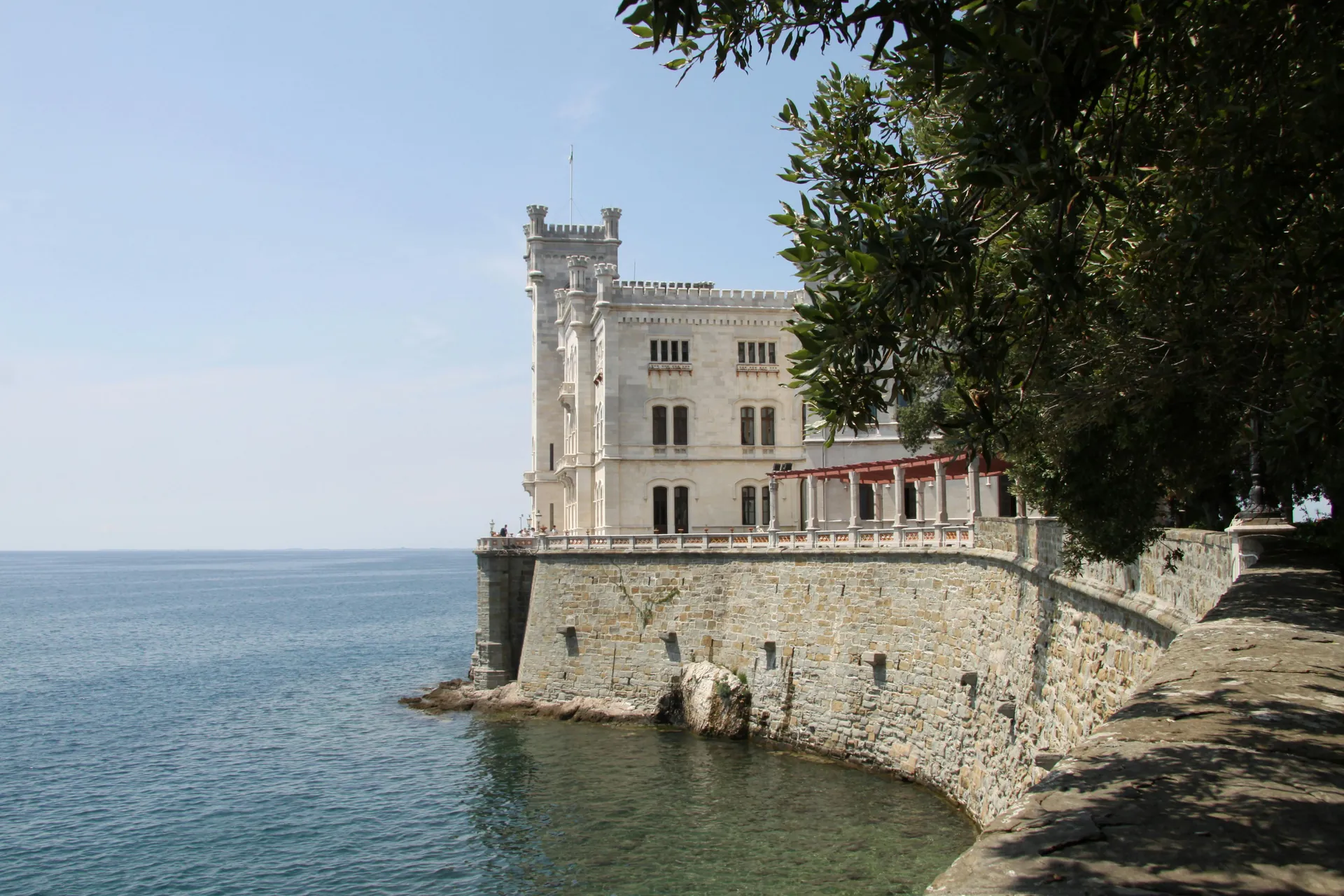
The village of Slivia is perfectly positioned for a broader exploration of the Duino-Aurisina municipality. After emerging from the cool depths of the cave, you can drive ten minutes directly to the coast. The Castello di Duino is perched on a sheer cliff overlooking the Gulf of Trieste. The contrast between the dark, enclosed space of the cave and the expansive, sunlit views from the castle walls is jarring in the best possible way. The adjacent Rilke Trail offers spectacular views of the Adriatic and is heavily featured in our Places to Visit section. You can find more comprehensive regional guides through the PromoTurismoFVG portal.
Look for a frasca—a bundle of fresh branches hanging by the side of the road. This indicates an open osmiza, a tradition dating back to the Austro-Hungarian Empire where farmers open their homes to sell their own wine and cured meats.
Elena Valli
A visit to the Carso is incomplete without participating in the local food culture. After a cave tour, locals retreat to an osmiza. You sit at a rough wooden table, eat sharp local cheese, slice into heavily peppered cured meats, and drink Vitovska wine poured directly from an unlabelled jug. It is the antithesis of a formal restaurant experience. It is rough, simple, and entirely genuine. If you want to dive deeper into the culinary history of the region, exploring a Unique Food Tour with Local Flavors back in the city center will bridge the gap between the rural traditions of the Karst and the cosmopolitan port.
Final Thoughts on the Underworld
Grotta Torri di Slivia is a quiet reminder of deep, geological time. The stalagmites grow drop by drop, entirely indifferent to the empires that rise and fall on the surface above them. The cave requires physical effort to access, and it forces you to acknowledge the sheer mass of the earth. The next time you find yourself wandering the elegant streets of Trieste, look toward the hills. Remember there is an entirely different, silent world waiting just below the surface.