Libreria Antiquaria Umberto Saba
The Literary Soul of Trieste
My name is Elena, and I have spent almost five decades walking the streets of this city. Trieste is a place that demands patience. It does not reveal itself immediately like Rome or Florence. When the famous Bora wind blows off the Adriatic Sea, particularly in January, the coldest month of the year, the air turns sharp and bitter. The wind rattles the old wooden window frames and forces people indoors. On these days, there are exactly two places a proper Triestine goes to hide. One is a warm coffeehouse, usually Caffè San Marco, with a steaming glass of local coffee clutched in both hands. The other is a bookstore.
The Libreria Antiquaria Umberto Saba is located on Via San Nicolò. Trieste is an exceptionally walkable city, and this pedestrian-friendly street is right in the heart of the Borgo Teresiano district. You walk past modern clothing boutiques and small cafes, and then you see the dark wooden storefront. It looks entirely out of place in the twenty-first century. That is exactly why it matters. You push the door open, the bell rings, and the noise of the modern world stops.

A Sanctuary of Literature
The shop is a physical record of a man’s life. Umberto Poli, who later took the pen name Umberto Saba, bought this space in 1919. He was the quintessential poet of our city. He wrote about the harbor, the steep alleys, the ordinary people walking up the hills, and the profound melancholy that often sits over the gulf. You can follow the ghosts of these writers on our Trieste Literary Map, but the bookstore remains Saba’s true anchor.
He spent decades behind the counter. He organized volumes, wrote his poetry, and talked with the local intellectuals who used the space as a living room. Saba’s life was not easy. He was born to a Jewish mother and an absent father. He suffered from severe depression. During the racial laws of the late 1930s, he had to flee his beloved city and hide in Florence. But the bookstore survived. He trusted it to his assistant, Carlo Cerne, who protected the inventory and the business until the war ended. The Cerne family still owns the shop today, which is now managed by Massimo Battista.
It is the exact specific corner of the city you want to escape into.
The Atmosphere
The interior maintains its original 1920s aesthetic. There are no bright fluorescent lights or digital displays. The shelves are dark, heavy wood, stretching all the way to the ceiling. The floorboards creak under your boots. You have to turn your body sideways to navigate the narrow aisles where teh air smells faintly of vanilla, old binding glue, and paper settling into age. Space is incredibly tight. Books are stacked on tables, on chairs, and sometimes on the floor. It is an environment that forces you to slow down.
The Collection
This is a working antiquarian bookstore. The inventory ranges from affordable vintage paperbacks from the 1960s to highly valuable, rare first editions. You will find extensive sections on local Triestine history, the Austro-Hungarian empire, and Italian literature. Naturally, Saba’s own life work, the Canzoniere, is usually present in various editions. If you are looking for something specific, you must ask the staff. They know exactly where every single volume is placed, even if the arrangement looks chaotic to a visitor.
There are places in Trieste where time simply refused to move forward. The Saba bookstore is the most stubborn of them all.
Visitor Information and Practicalities
If you plan to visit, you need to understand the rhythm of the place. This is not a museum, though it feels like one. It is an active business that respects the quiet dignity of old books. You do not need to buy anything to enter, but you should treat the space with a certain level of reverence.
| Category | Details |
|---|---|
| Address | Via San Nicolò, 30, 34121 Trieste (TS), Italy |
| Opening Hours | Tue-Sat: 09:00–12:30 and 15:30–19:30, Closed on Mondays (Check website for seasonal changes) |
| Accessibility | Street-level access on the ground floor. The interior aisles are very narrow. |
| Pricing | Entry is free. Book prices vary from a few euros to hundreds based on rarity. |
| Etiquette | Speak softly. Ask the staff for help before pulling a volume from the highest bookself. Do not bring food or drinks inside. |
If you prefer a structured introduction to the city before wandering into small shops on your own, I often recommend downloading a digital walking guide created by a local. It helps you understand the layout of the streets and the historical context of the buildings you pass.
The Evolution and Surrounding Neighborhood
The bookstore transitioned long ago from Saba’s personal shop to a protected cultural landmark. The Italian state officially recognizes it as a “Bottega Storica” (Historic Shop). This status protects the interior architecture and ensures the space cannot be converted into a modern retail store. We have a deep respect for preserving our history here.
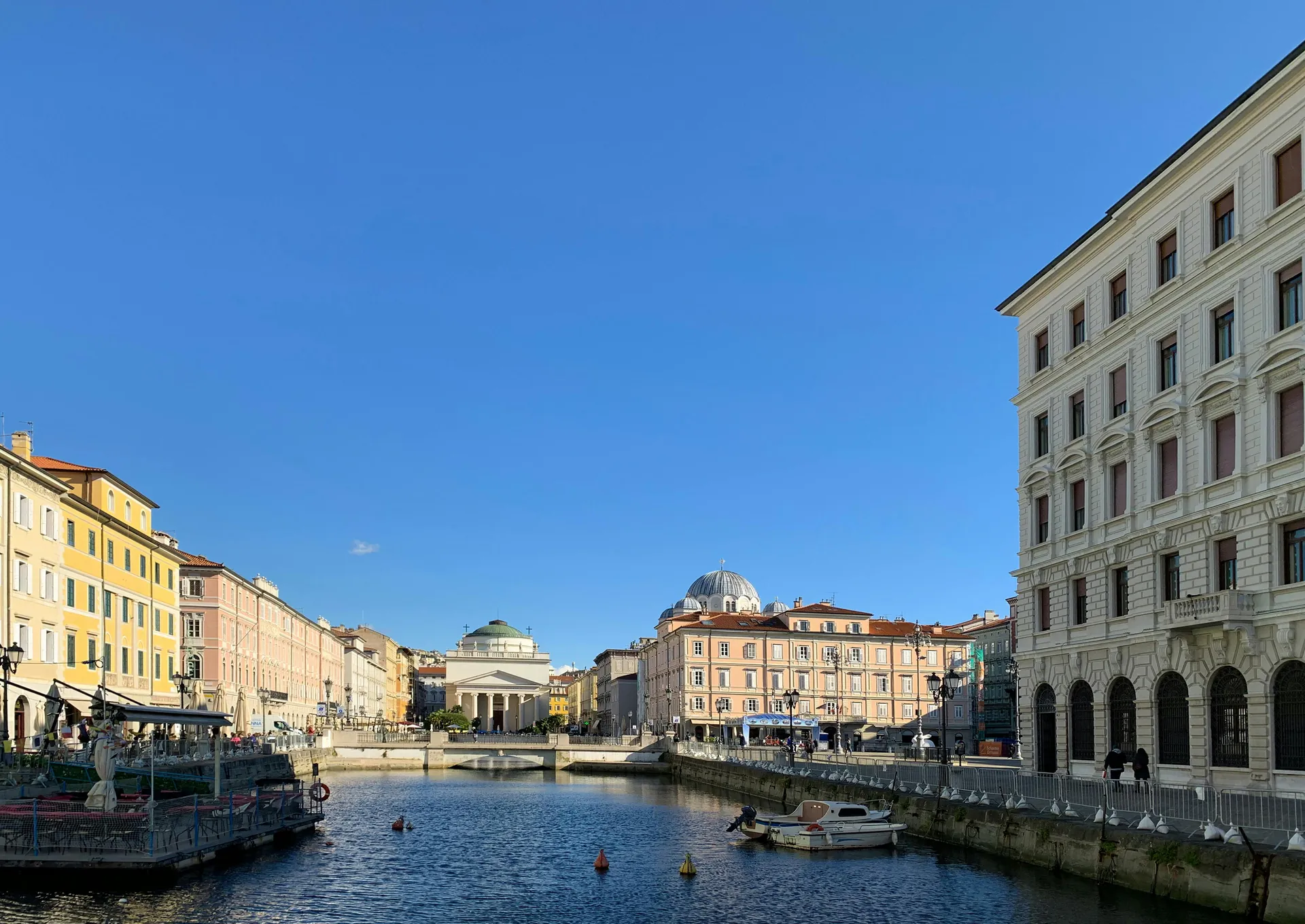
When you walk out of the shop, you are in the middle of Trieste’s historic center. Via San Nicolò intersects with the old Jewish Ghetto, a neighborhood of narrow alleys and antique shops that sits just behind the grand Piazza della Borsa. The Jewish community was instrumental in building the wealth and culture of Trieste during the Habsburg era. Saba himself was a product of this community. A few streets over, you find the Grand Canal (Canal Grande), where small boats bob in the water and the neoclassical buildings reflect in the surface. The Official Trieste Tourism Board has excellent resources on mapping out these architectural zones.
Exploring this area usually makes people hungry. Travelers frequently ask what food Trieste is known for. Because we are a border city, our traditional dishes are heavy, hearty, and deeply influenced by Austria and Slovenia. If you are here in the winter, you eat jota, a thick soup made of sour turnip, beans, and smoked pork. For dessert, you find a slice of presnitz, a pastry rolled with nuts, raisins, and rum. Some visitors choose to book a small-group food tour to taste these specific regional flavors. On the weekends, many locals leave the city center entirely and drive up to the Karst plateau to find an osmiza. These are temporary farm-taverns where families sell their own house wine, hard boiled eggs, and cured meats. You sit at wooden tables under the trees. It is the complete opposite of the quiet, intellectual atmosphere of the bookstore, yet both are fundamental to understanding how we live.
Expert Tips for Bibliophiles
For those who love literature, this shop is a pilgrimage site. But Trieste has a broader literary network that you should explore while you are here.
Finding Rare Prints
Do not rely on the window displays. The most valuable books are kept inside, often behind the counter or in the glass cabinets. If you are a collector of Italian poetry or early 20th-century European history, speak directly to the owner. Tell them your specific interests. Antiquarian booksellers are highly protective of their inventory, but they are also deeply passionate. If they see you respect the material, they will open drawers and pull out remarkable items.
The Trieste Literary Map
Saba was not the only giant walking these streets. James Joyce lived in Trieste for over a decade. He taught English to the locals, drank heavily in the cafes, and drafted parts of Ulysses here. One of his English students was Ettore Schmitz, a local businessman who wrote under the name Italo Svevo. Svevo became one of Italy’s greatest modernist writers. You can trace their letters and manuscripts at the Museo Svevo, which is a short walk from the bookstore. The three of them—Saba, Joyce, and Svevo—form the holy trinity of Triestine literature.
To read Saba is to understand the pain and the beauty of a city that has belonged to many empires, but truly only belongs to itself.
Elena Valli
Conclusion: Understanding Triestinità
People often ask if Trieste is more Italian or Slovenian. We sit right on the border. You can take a city bus and end up in a different country. The truth is that Trieste is its own distinct entity. We are Italian, we are Slavic, we are Central European, and we are Greek. This complex, layered identity is called Triestinità.
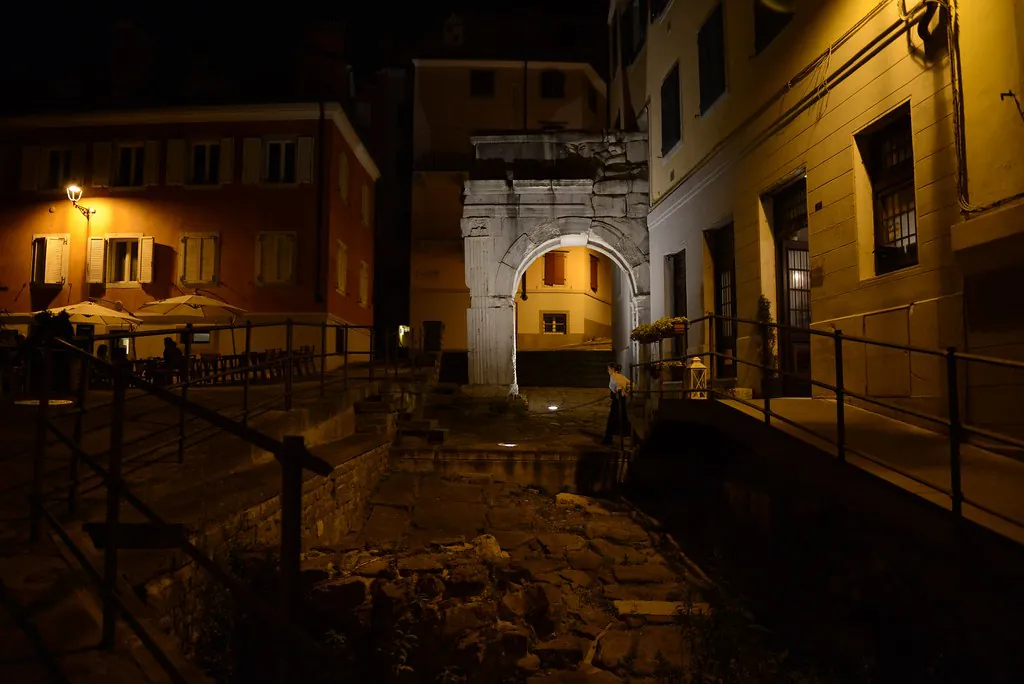
You cannot understand this identity just by looking at the grand buildings in Piazza Unità or by staring at the sea. You understand it by reading the words of the people who struggled to define it. The Libreria Antiquaria Umberto Saba is the physical space where those words are kept safe. The city is recognized globally as a UNESCO City of Literature, and this small, cramped, dusty shop on Via San Nicolò is the beating heart of that designation. When you visit, you are participating in a tradition of memory and preservation that defines everything we are.