
Immaginario Scientifico
The Resurgence of the Old Port
Trieste is a city with a split personality. Visitors usually spend their days chasing the ghosts of James Joyce and Italo Svevo through our historic cafes, or bracing against the intense gusts of the Bora wind along the seafront. Beneath this literary and meteorological drama, Trieste is fundamentally a city of science. The Immaginario Scientifico is our dedicated interactive science center. In 2020, the museum relocated from its original coastal home in Grignano to Magazzino 26, a monumental late-nineteenth-century warehouse in the Porto Vecchio. This move anchored the massive urban redevelopment of our old port district.
Magazzino 26 is an architectural marvel of the Austro-Hungarian era. The building stretches endlessly along the waterfront, its restored brickwork and iron pillars standing in sharp contrast to the high-definition digital screens now housed inside. The official Immaginario Scientifico occupies a significant portion of this space. The environment feels decidedly industrial, which creates an appropriate backdrop for exploring the mechanics of the natural world.

A Hands-on Approach to Physics
The core philosophy of the center revolves around direct interaction. You are meant to touch the exhibits. The main gallery, known as Phenomena, is a sprawling collection of mechanical, optical, and fluid dynamics stations. Visitors manipulate levers to understand electromagnetism and peer into mirrored chambers to grasp the complexities of light refraction. It is a loud, kinetic space. Children run between stations, testing hypotheses by physically pulling, pushing, and spinning the apparatuses.
The layout encourages wandering rather than following a strict linear path. You might find yourself observing the chaotic motion of a double pendulum before moving on to experiment with acoustic waves. The museum strips away the intimidating jargon often associated with physics, replacing it with tangible reactions. You pull a rope, and a localized vortex forms in a cylinder of water right in front of you.
Beyond the mechanical exhibits, the Planetarium offers a distinct shift in pace. The high-definition digital dome runs scheduled astronomy projections. These sessions pull you out of the tactile world and drop you into the silent expanse of the solar system. The contrast between the noisy, hands-on floor and the quiet immersion of the planetarium is striking.
The “Trieste Science” Connection
Trieste has one of the highest concentrations of researchers per capita in Europe. The Immaginario Scientifico dedicates a specific section of its floor plan to explaining this phenomenon. During the Cold War, Trieste sat on the edge of the Iron Curtain. This geopolitical position led to the establishment of numerous international research institutions aimed at bridging the East-West divide through scientific diplomacy.
Science in Trieste is as ingrained in the local culture as our habit of ordering a capo in b at the coffee counter.
The exhibits detail the ongoing work of major institutions located just a few miles away. You learn about the advanced physics research at the Scuola Internazionale Superiore di Studi Avanzati (SISSA) and the global climate and oceanography modeling conducted by the National Institute of Oceanography and Applied Geophysics (OGS). The museum also highlights the International Centre for Theoretical Physics (ICTP), which has brought thousands of scientists from developing nations to study on our coast. This section grounds the playful physics experiments in serious, real-world applications happening right outside the museum doors.
Visitor Experience and Family Logistics
If you are traveling with children, the Immaginario Scientifico is an essential stop. It provides an energetic release valve after days spent looking at quiet historical monuments. The space is entirely modernized and wheelchair accessible, with wide ramps and elevators integrated into the historic warehouse framework. It is the exact kind of place you want to bring a curious mind to.
Local Tip: The museum is heavily utilized by local schools on weekday mornings. If you prefer a quieter environment to read the informational plaques and try the exhibits without waiting, plan your visit for a Saturday or Sunday afternoon.
Temporary exhibitions rotate through the ground floor spaces of Magazzino 26 throughout the year. These displays often focus on intersections between technology, climate change, and local history. Navigating teh vast spaces of the Old Port can feel slightly desolate on a windy winter day, but the interior of the science center is consistently bright and active.
Practical Information
| Detail | Information |
|---|---|
| Address | Magazzino 26, Porto Vecchio, 34135 Trieste, Italy |
| Standard Admission | Full price: €8.00 – €10.00 | Reduced: €6.00 – €7.00 |
| Opening Hours | Closed Mondays. Open Tue–Fri (afternoons) and weekends (full day). Always verify seasonal changes online. |
| Accessibility | Fully accessible for visitors with reduced mobility. |
Getting There and Exploring Further
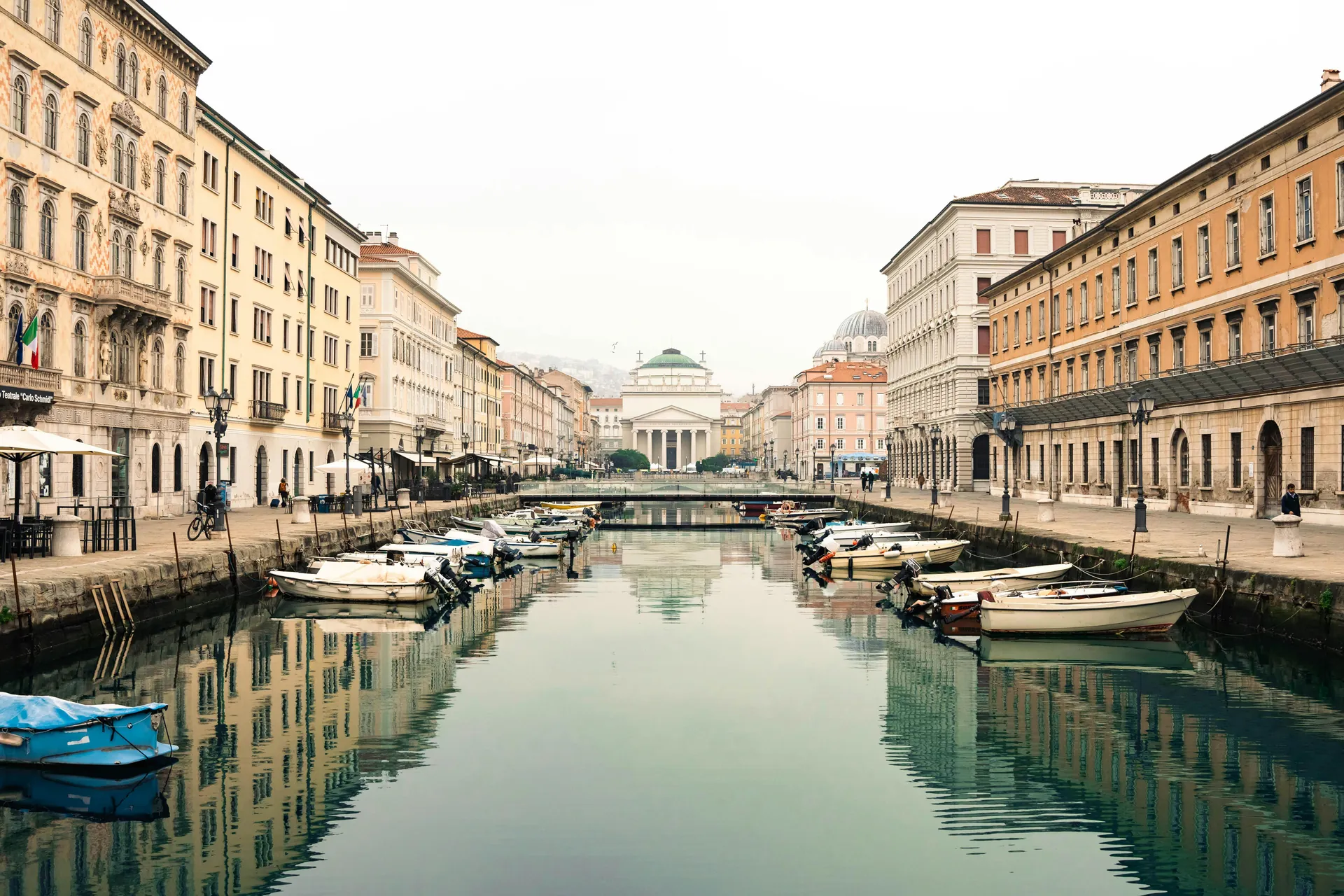
Reaching the Porto Vecchio requires a short journey from the central Piazza Unità d’Italia. You can walk along the seafront promenade, passing the Canal Grande and the central railway station, until you reach the gates of the old port. Local bus lines also service the area, dropping you close to Magazzino 26. The winds off the Adriatic can be harsh along this exposed stretch of the coast, so dress appropriately if you choose to walk.
A visit here pairs naturally with the nearby Museo del Mare, which explores Trieste’s maritime history. If you want to understand the broader context of the city’s development and its unique blend of Italian, Slavic, and Habsburg influences, I highly recommend booking a Trieste Walking Tour with Audio and Written Guide by a Local. It allows you to explore at your own pace before heading out to the port.
For additional logistical details on city transit, review our Practical Info guide. If you are looking to build a full itinerary around the city’s museums and historic sites, browse our Places to Visit page. Trieste has a quiet complexity that reveals itself slowly, and understanding its scientific heritage is a large part of that discovery.