
Food, Wine & Culinary Tours

Trieste: Unique Food Tour with Local Flavors and Tastings
⭐ Trieste: Experience
🔥 Free cancellation for flexible planning

Experience Slovenian Coast line with Wine Tasting from Trieste
⭐ Experience Experience
🔥 Free cancellation for flexible planning

Trieste Pasta-Making Class: 3 Traditional Shapes
⭐ Trieste Experience
🔥 Professional local guide included

Land and Sea Riviera Koper, Izola and Piran with Tastings
⭐ Land Experience
🔥 Instant confirmation after booking

Prosecco’s Roots & the Karst Region from Trieste
⭐ Prosecco’s Experience
🔥 Bestseller in 2026

Prosecco Origins Wine Experience
⭐ Prosecco Experience
🔥 Bestseller in 2026

Trieste: Small group Pasta and Tiramisu class with Mamma
⭐ Trieste: Experience
🔥 High demand: 17 people viewed today

Trieste Historic Cafés Experience
⭐ Trieste Experience
🔥 Instant confirmation after booking
Booking Your Culinary Experience
When you map out your days here, you will notice a wealth of guided walks, wine tastings, and food tours available. I often get asked how best to secure a spot for these experiences. Many seasoned travelers prefer using established booking platforms like Viator, GetYourGuide, or Headout. There are very practical reasons for this preference.
Third-Party Platforms
- Free Cancellation: Travel plans shift unexpectedly, and knowing you can adjust your itinerary without financial penalty brings real peace of mind.
- Language Support: These platforms provide 24/7 English-speaking customer service.
- Logistics Handled: Many Carso plateau wine excursions include hotel pickup and drop-off, saving you the trouble of figuring out rural bus schedules.
- Professional Guides: You are guaranteed an English-speaking local who can translate the complex nuances of our dialect.
Direct and On-Site
- Direct Support: Buying from the source supports local businesses immediately at the point of sale.
- Spontaneity: Excellent for self-guided travelers who prefer to walk into a venue without a rigid schedule.
- Considerations: Direct bookings rarely offer flexible cancellation. You might encounter language barriers at smaller ticket counters.
- No Bundles: You will not have access to bundled extras like transfers or combined city tours.
Official Tickets & On-Site Purchases
If you prefer the direct route, you can always book cooking classes or tastings straight through local vendor websites or the regional Turismo FVG portal. Going directly to the source is absolutely a valid choice. Just keep in mind the practical realities mentioned above. If you are entirely comfortable navigating Italian websites and managing your own transport, this is a highly rewarding way to organize your visit.
| Experience Type | Estimated Price | Best For |
|---|---|---|
| Historic Coffee Walk | €25 – €40 | Architecture and caffeine enthusiasts |
| Carso Wine Excursion | €60 – €90 | Travelers looking to explore local vineyards |
| City Center Food Crawl | €45 – €70 | First-time visitors wanting an overview |
Trieste Culinary Identity: A Crossroads of Flavor
People often ask if Trieste is worth going to, especially when compared to the Renaissance heavyweights of Florence or Rome. The answer depends entirely on what you value. If you want the typical Italian postcard, you should look elsewhere. If you seek a handsome city with a complex history and a food culture that ignores national borders, Trieste is unmatched. We sit at the exact point where the Mediterranean meets Central Europe and the Balkans. Our food is the direct result of this geography.
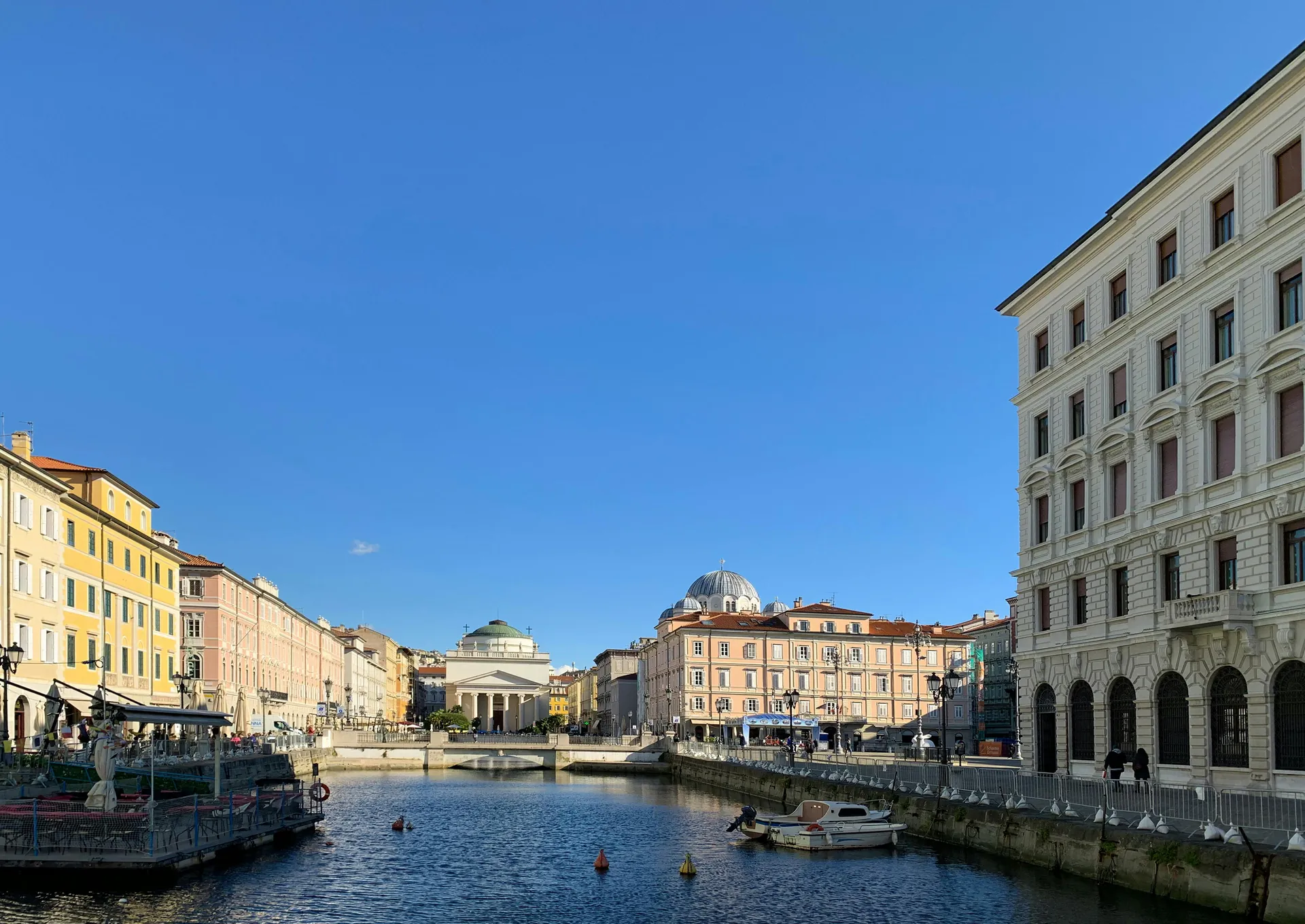
Visitors frequently wonder what food Trieste is known for, expecting the usual answers of pasta and pizza. The reality is far heavier. The signature dish of Trieste is arguably jota. It is a thick sour soup made from fermented cabbage, beans, and potatoes. Cooks boil it down with smoked pork until it becomes intensely savory. It is the exact meal you crave when teh infamous Bora wind howls through the streets. The Bora is a katabatic wind that drops violently from the Karst plateau down to the sea. When it blows at full force, people retreat into the historic eateries to eat hot soup and escape the cold.
We do not strictly adhere to the so-called “spaghetti rule” you might hear about further south, which dictates that you must never cut your long pasta. Our culinary vocabulary is built on completely different foundations. We eat goulash heavily spiced with Hungarian paprika. We serve it alongside bread dumplings rather than polenta or pasta.
The Historic Coffee House Culture
Maria Theresa of Austria declared Trieste a free port in 1719. This single administrative decision transformed a small fishing settlement into the primary maritime outlet for the Habsburg Empire. Ships arrived from the Ottoman Empire loaded with coffee beans. Today, we import a massive percentage of Italy’s coffee. The aroma of roasting beans is a permanent fixture in the air around the industrial port zones.
Our historic cafés are the social heart of the city. I spend most of my mornings at Caffè San Marco on Via Cesare Battisti. It opened in 1914 and retains its original Secessionist furniture. It is a place where writers like James Joyce and Italo Svevo used to sit for hours reading the daily papers. Ordering coffee here requires a specific vocabulary. If you want an espresso in a glass, you ask for a nero in b. If you want a macchiato in a glass, it is a capo in b. The “b” stands for bicchiere, meaning glass. When you order at the counter, you will recive a small receipt to take to the barista. Breakfast is usually a quick affair featuring a krapfen, an Austrian-style filled doughnut, rather than a standard Italian cornetto.
The Buffets and the Art of Boiled Meats
You cannot understand Trieste without understanding the buffet. These are historic eateries that evolved to feed dock workers quickly. The most iconic is Buffet da Pepi, which has been operating since 1897. The window display is a mountain of pork. You will see sausages and the beloved prosciutto cotto in crosta. This is a whole boiled ham baked inside a thick bread crust. They slice it hot and serve it with freshly grated horseradish.
Eating at a Triestine buffet is a loud, communal experience. You stand elbow-to-elbow with bank managers and students over plates of hot mustard and pork.
How cheap is Trieste? It sits comfortably in the middle range for Northern Italy. A morning coffee and pastry will cost you less than three euros at a neighborhood bar. A full meal of boiled meats at a historic buffet might run around twenty euros. The city lacks the punishing tourist markup found in Venice.
Balkan Influences and Street Food
The Balkan influence is omnipresent in our daily diet. Walk down Viale XX Settembre and you smell grilled meat. We eat ćevapčići, which are small skinless sausages made of minced beef and pork. They are served with a raw red pepper spread called ajvar. You will also find bakeries selling burek, a flaky phyllo pastry stuffed with salty cheese. This is the daily lunch of many Triestines, a direct result of our proximity to Slovenia and Croatia.
The Osmiza Tradition on the Carso
If you leave the city center and drive up onto the Carso plateau, you enter a different world. The landscape is rugged limestone. The air is noticeably cooler. This is where you find the osmiza. The tradition dates back to an edict by Emperor Joseph II in the late eighteenth century. He allowed farmers to sell their own wine and produce tax-free for eight days a year. The word comes from the Slovenian osem, meaning eight.
Today, the rules remain strict. An osmiza can only sell what it produces. You sit on wooden benches under the trees, eating hard-boiled eggs and sharp local cheeses. You drink pitchers of Vitovska, a crisp white wine, or Terrano, a fiercely acidic red that cuts right through the fat of the cured meats. To find an open osmiza, you look for a frasca, a leafy branch attached to a wooden signpost along the road. Finding the hidden farmhouses scattered across the limestone plateau is an adventure you must be ready for. You can learn more about the local grape varietals through the Carso DOC consortium.

Adriatic Catch and the Aperitivo Hour
Down by the water, the focus shifts entirely to the sea. The Gulf of Trieste provides a steady supply of sardines and the tiny clams we call caparozzoli. You will find excellent seafood along the Rive and in the Cavana neighborhood. A classic dish is sardoni in savor. These are fried anchovies marinated in vinegar and onions. It is a preservation technique borrowed from Venice. The sharp acidity is incredibly refreshing during the humid summer months.
Late afternoon brings the aperitivo ritual. The entire city stops for a spritz. Unlike the bright orange versions ubiquitous elsewhere, a traditional Triestine spritz is often just white wine and sparkling water. You sit at a table in Piazza Unità d’Italia, watching the light change on the Adriatic. It is the transitional moment between the workday and the evening meal.
Sweets, Tap Water, and Practicalities
Our desserts carry heavy Central European DNA. The traditional dessert of Trieste is the presnitz. It is a coiled pastry filled with a dense mixture of dried fruits and spices. It was originally created to honor Empress Sissi of Austria. You will also see towering slices of Sacher torte in the bakery windows.
A few practical matters often come up in conversation with visitors. You can absolutely drink the tap water in Trieste. It comes down from the surrounding mountains. It is cold and perfectly safe. There is no need to constantly buy bottled water. As for mobility, Trieste is a very walkable city within the central grid built by the Austrians, known as the Borgo Teresiano. The moment you move toward the San Giusto hill, the incline becomes severe. During the summer months, there are indeed mosquitoes in Trieste, especially near the canals. A standard repellent picked up at any local pharmacy will keep them away.
Pro Tip: When dining at the historic buffets, carry small change. While credit cards are widely accepted across the city, the traditional osmiza farms on the Carso plateau still operate largely on a cash-only basis.
Elena Valli
Tipping in Trieste follows standard Italian practice. It is not strictly mandatory. Leaving a few euros on the table is a polite acknowledgment of good service. Italians refer to the city as Tree-eh-steh, rolling the ‘r’ slightly. Master that pronunciation, walk into a café with confidence, and order a capo in b. You will blend right in.
For more details on navigating the city’s terrain and public transport, take a look at our Practical Info page. If you are ready to book a guided culinary walk or wine tasting, you can explore the options on our Top Activities & Tours page.