
Foiba di Basovizza
Foiba di Basovizza: A Quiet Reckoning on the Karst
I often tell friends joining me for a morning espresso at Caffè San Marco that to understand Trieste, you must leave the city center and head up to the limestone plateau. Up here on the Karst, the landscape is raw and unforgiving. The Foiba di Basovizza is a national monument that asks for silence. Declared a protected site by the Italian Republic in 1992, this location holds a heavy history that many locals are still coming to terms with.Understanding teh history of this specific location requires looking back at the complicated, shifting borders of the Julian March.Historical Context and the Julian March
The deep chasm at Basovizza was originally an early 20th-century mining shaft excavated for coal. When the coal proved insufficient, the operation was abandoned. By May 1945, the function of these deep karst sinkholes shifted in a brutal direction. As World War II ended, Yugoslav partisan forces took control of Trieste and the surrounding territories. During this period of occupation and political retribution, thousands of Italians—including both military personnel and local civilians—were thrown into these natural and artificial chasms, known locally as foibe.The events of 1945 left a deep scar on the region. For decades, the political climate of the Cold War kept these memories quietly suppressed. You can read detailed archival records and historical analyses through the Istituto Regionale per la Storia della Resistenza, which maintains extensive documentation on the border disputes and tragedies of the upper Adriatic.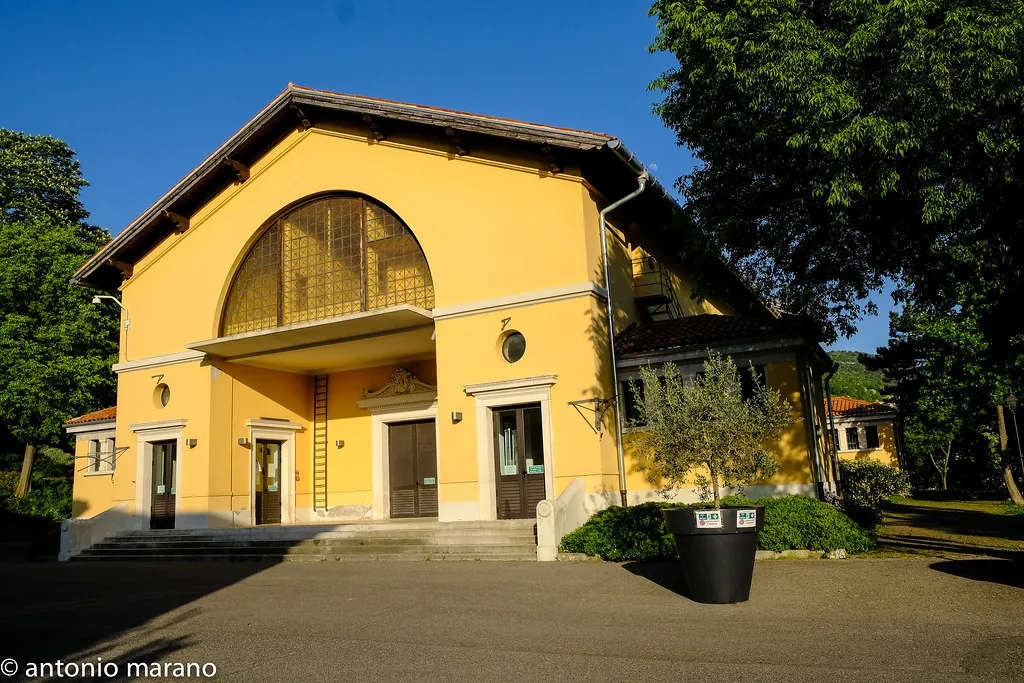
The Monumental Complex and Documentation Center
The physical monument is deliberately austere. A massive iron and stone slab seals the 200-meter-deep shaft. A large cross and a simple commemorative plaque sit beside it. The architects designed the space to demand reflection, stripping away any unnecessary ornamentation. The surrounding park creates a boundary between the modern road and the memorial zone.
Adjacent to the memorial is the Documentation Center. Inside, visitors find a chronological series of panels detailing the timeline of the Julian March. The exhibits cover the fascism era, the 1945 massacres, and the subsequent exodus of Italians who fled their ancestral homes in Istria and Dalmatia. I recommend checking the official Foiba di Basovizza website to confirm exhibition availability before driving up.
Visitor Information
| Detail | Information |
|---|---|
| Entry Fee | Free of charge for all visitors |
| Outdoor Memorial Hours | Accessible 24 hours a day, year-round |
| Documentation Center | Typically open 10:00 AM – 5:00 PM (Subject to seasonal changes) |
| Accessibility | The main paved pathways and memorial area accommodate wheelchairs |
Atmosphere and Etiquette on the Karst
Approaching the Foiba di Basovizza requires a specific mindset. This is a site of mass death and mourning. Keep your voice low and turn your phone on silent. The environment itself often dictates the mood. The Bora wind blows fiercely across the unprotected plateau during the colder months, dropping the temperature sharply compared to the coastal city below.Trieste Tourism outlines basic guidelines for visiting historical sites on their official portal. Dress appropriately for a solemn memorial and respect the boundaries set around the shaft.Always bring an extra layer when visiting the Karst plateau. The weather shifts rapidly, and the wind up here carries a sharp chill even on sunny afternoons.
Elena Valli