
Museo Sartorio
The Legacy of the Free Port
People often wonder what is special about Trieste. The answer lies in its distinct blend of Mediterranean port life and Central European business acumen. In 1719, the Habsburg monarchy declared the city a free port. This single administrative decision changed the trajectory of the region entirely. Merchants and ambitious families from across the continent moved here to capitalize on the tax exemptions and the direct access to maritime routes. The Sartorio family was one of these determined dynasties. They relocated from Sanremo in the late 1700s and quickly embedded themselves in the local economy. They built immense wealth through trade and early forms of shipping insurance.

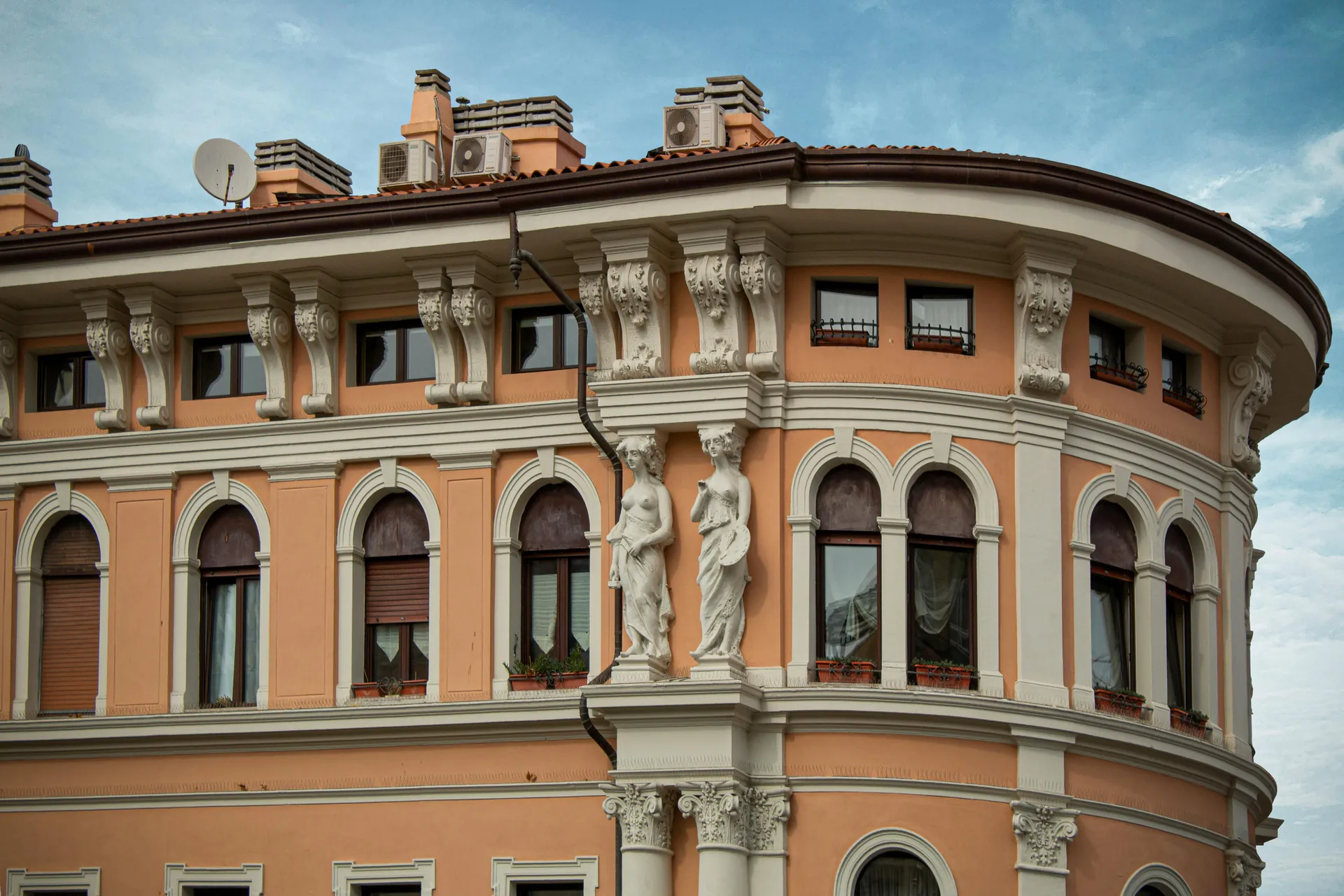
The Civico Museo Sartorio is a direct record of that 19th-century reality. The villa itself began as a modest 18th-century structure. As the family’s financial power grew, they expanded the building significantly. They needed space to entertain clients and to house their expanding art collection. The resulting architecture is a mix of neoclassical restraint and practical merchant utility. Anna Segrè Sartorio gave the property to the city in 1946. She left the interiors exactly as they were. This preservation effort is officially documented by the Italian Ministry of Culture, ensuring the artifacts remain intact for future generations.
The Bourgeois Lifestyle
The ground floor gives you a clear sense of the wealthy lifestyle the Sartorio family was accustomed to. The rooms retain their original furniture and everyday porcelain objects. It feels less like an institution and more like a private home where the owners have simply stepped out for a moment. You can walk through the music room and the adjacent library to see exactly how these families spent their private hours.
Understanding the local flavors that fueled these merchant classes is entirely possible if you join a Unique Food Tour with Local Flavors. The food of Trieste is a direct reflection of the trade routes that made families like the Sartorios wealthy. If you want to understand the broader historical timeline of the city before examining these specific buildings, reading through our practical information guide is a very good starting point.
Artistic Highlights
The Old Masters Gallery
One wing of the museum holds a dense collection of historical paintings. You will see works by Palma il Giovane alongside several prominent Flemish pieces. The family bought what was fashionable for their social class at the time. Walking through teh rooms, you immediately notice the heavy framing and dramatic lighting typical of the era.
The Decorative Arts
Beyond the paintings, the museum houses an extensive collection of ceramics. The display includes rare majolica from regional Italian workshops. These items were not just decorative. They signaled the family’s refined taste and their extensive trade connections across the peninsula.
The Tiepolo Collection
This room is the primary reason many art historians visit the museum. The house contains 254 drawings by Giambattista Tiepolo. The Sartorio family acquired these sketches in the 19th century. They preserved a massive volume of the Venetian master’s preliminary work in one single location.
The acquisition of 254 original Tiepolo drawings by a single family illustrates the sheer financial power of Trieste’s merchant class during the 1800s.
The sketches range from mythological scenes to detailed religious character studies. Looking closely at the paper, you can see the rapid, confident ink strokes Tiepolo used to plan his large frescoes. It is a rare opportunity to see the unpolished thoughts of a major artist.
The Garden Oasis
The walled garden of the Museo Sartorio remains one of the quietest green spaces in the center of Trieste. It is a place to breathe away from the traffic of the waterfront.
Elena Valli
Visitors often ask about the seasonal weather and if there are mosquitoes in Trieste. In the late summer months, you will find a few mosquitoes near the shaded ivy in the museum’s courtyard, so bringing a basic repellent is a smart idea. If you happen to visit in January, the coldest month in Trieste, the heavy stone walls of the villa offer a welcome refuge from the freezing wind blowing off the Karst plateau.
Visitor Information
| Detail | Information |
|---|---|
| Opening Hours | Thursday to Sunday, 10:00 AM – 5:00 PM (Closed Mondays) |
| Admission | Generally free (Verify on official municipality site) |
| Accessibility | Ground floor is accessible; upper historic floors have limitations |
| Photography | Allowed for personal use without flash |
Logistics and Location
Travelers frequently ask if Trieste is a walkable city. It absolutely is. The grid around the waterfront is flat and straightforward, though you encounter steep inclines the moment you head toward the older settlements. You will find the museum at Largo Papa Giovanni XXIII, 1. It sits right at the base of the San Giusto hill. You can check the current administrative details and any schedule changes directly on the Trieste Cultura portal.
This location makes it an easy stop on a broader walking route. You can spend an hour inside the villa and then walk up the slope to explore the Cathedral of San Giusto. The regional tourism board, Discover Trieste, often recommends pairing these two sites in a single afternoon. If you prefer having the logistics handled for you, booking a Trieste Walking Tour with a Local gives you a solid grounding in the city layout before you tackle the specific museums on your own.