
Practical Info
Practical Information for Visiting Trieste: A Local’s Essential Guide
Welcome to my city. Trieste is a fascinating anomaly on the Italian map, a place where Mediterranean warmth collides with Central European precision and Slavic soul. I have lived here for nearly five decades, walking the same limestone pavements and drinking coffee in the same historic spaces my grandparents did. Understanding the logistics of Trieste makes your visit effortless. You do not need to figure out everything upon arrival. I am sharing the exact details I give friends when they step off the train at Piazza della Libertà. Let us get your bearings sorted so you can focus on finding a proper sense of place.Arrival and Local Transportation
Reaching Trieste is straightforward. Most international visitors fly into Venice Marco Polo Airport (VCE) or Treviso. From Venice, you can catch a direct regional train via Trenitalia, taking roughly two hours to glide along the coast into Trieste Centrale. We also have our own regional airport, Trieste Airport (TRS) in Ronchi dei Legionari. A dedicated train station connects the terminal to the city center in exactly thirty minutes. Some travelers even fly into Ljubljana, Slovenia, which is close enough for an easy cross-border transfer. If you plan to explore the broader region, consider booking a transfer from Venice Airport to Trieste to simplify your arrival logistics.
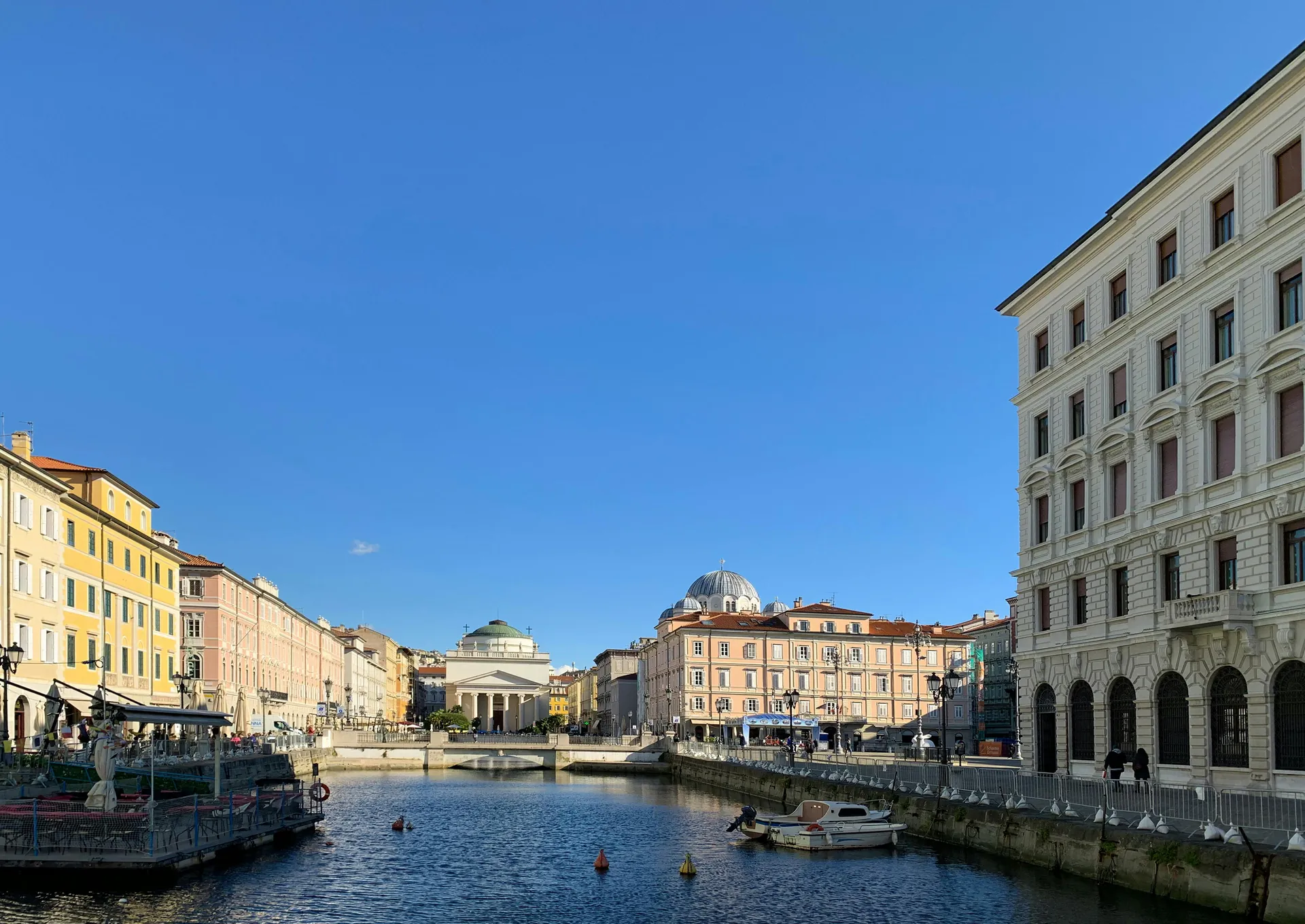
Trieste is highly walkable. The historical center is flat and compact, allowing you to cross from the Grand Canal to Piazza Unità d’Italia in under ten minutes. For longer distances, we rely on the blue buses managed by Trieste Trasporti. You must purchase tickets at a tabaccheria (tobacco shop) before boarding and validate them in teh small yellow machines onboard. The historic Opicina Tram is a beloved fixture that climbs the steep Karst plateau, though it undergoes frequent maintenance. Always check its operational status online before planning your journey up the hill. If you prefer a guided introduction on your first day, a Walking Tour by a Local is a great way to orient yourself.
Weather Dynamics and The Bora
You cannot fully understand Trieste without understanding the Bora. This strong, cold, gusty wind sweeps down from the Karst plateau and funnels through our streets, sometimes reaching hurricane-force speeds. It clears the air, leaving the skies a piercing, brilliant blue. The coldest months are January and February, which is exactly when the Bora is most frequent. If the wind is blowing during your stay, you must hold onto your hat and avoid walking too close to the edge of the Molo Audace. The gusts can easily knock an unprepared pedestrian off balance. Umbrellas are completely useless here during a storm; a sturdy windbreaker is your best defense.For accurate, real-time meteorological data, locals check the official Italian Air Force weather service. The best time of year to visit is late spring or early autumn, when the air is mild and the intense summer crowds are elsewhere. Summer is hot, and July evenings often bring mosquitoes near the canals, so pack a basic repellent. When the heat peaks, you can always take a dip at Barcola, our urban riviera.Coffee Culture and Social Etiquette
We are the coffee capital of Italy. The port has handled global coffee bean imports for centuries, and our local vocabulary reflects this obsession. You do not just order an espresso here. You order a “nero.” If you want a macchiato in a small glass, you ask for a “capo in b.” If you ask for a “gocciato,” you get an espresso with a single, precise drop of milk foam. This highly specific terminology is something you will need to get used to depending on which cafe you end up at.Do not order a cappuccino after midday. It is an unwritten Italian rule, and holding a milky coffee alongside your lunch will immediately mark you as a tourist.
Language, Identity, and Borders
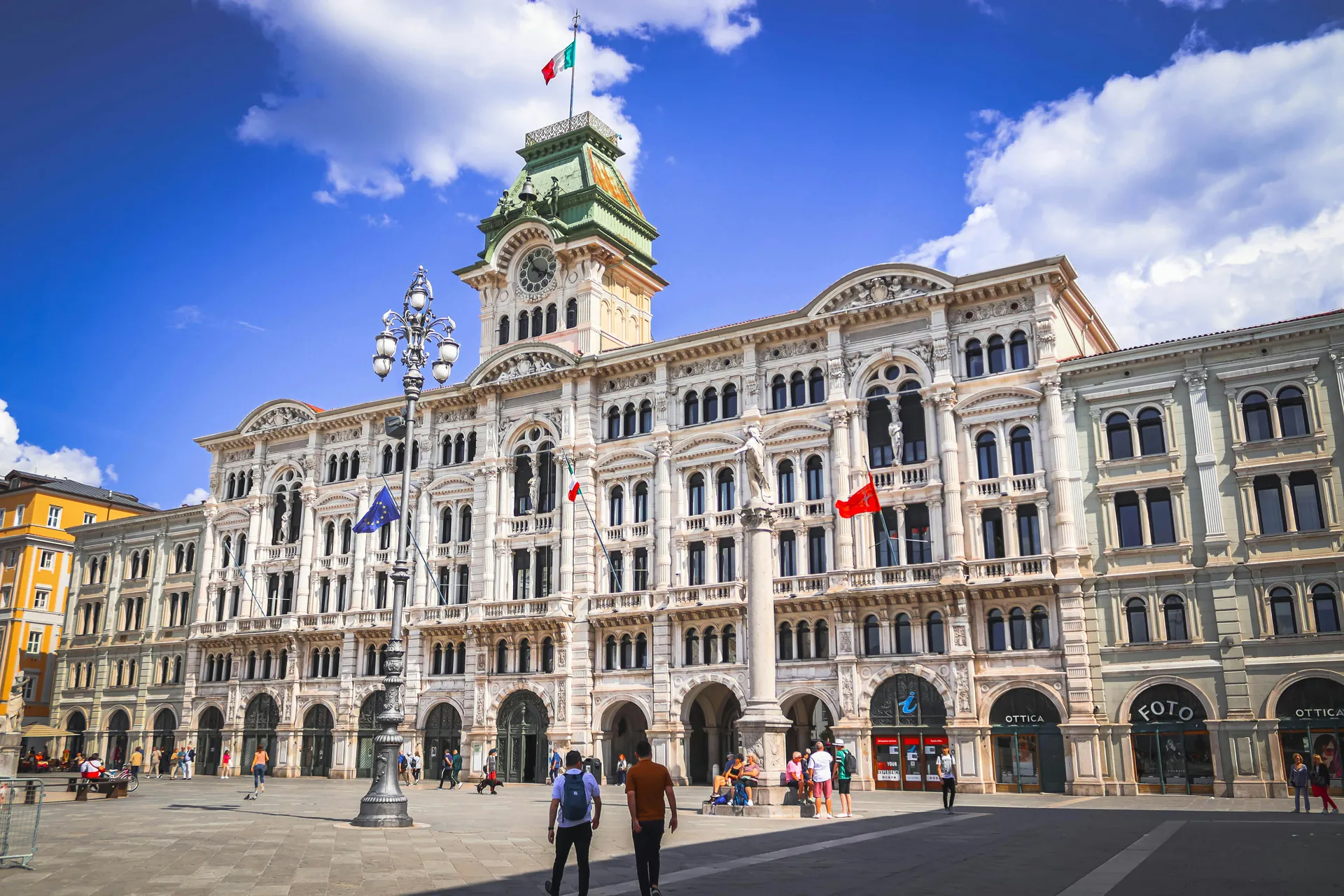
How do Italians say Trieste? The pronunciation is simple: Tree-ES-teh, with a slightly rolled ‘r’ and a crisp final vowel. English is widely spoken in hotels and restaurants, but you will hear a chaotic mix of languages on the street. The local dialect, *Triestin*, is heavily influenced by Venetian, but we also have a significant Slovenian-speaking minority.People often ask if Trieste is more Italian or Slovenian. Politically and culturally, it is fiercely Italian, yet the Habsburg architecture and Slavic surnames reveal a much more complex reality. Was Trieste a part of Croatia? No, but following World War II, the nearby Istrian peninsula—which had a large Italian population—was incorporated into Yugoslavia and is now divided between Slovenia and Croatia. This proximity makes Trieste an ideal launchpad for cross-border exploration. Can you visit Slovenia from Trieste? Yes, it takes less than thirty minutes on a local bus to cross the border. The Croatian border is also just a forty-five-minute drive away. You can wake up in Italy, eat lunch in Slovenia, and swim in Croatia by the late afternoon.Currency, Retail Hours, and the Siesta
The local currency is the Euro. Italy is increasingly card-friendly, and you can tap your card or phone for almost any hotel or restaurant bill. You still need to carry a few coins. Small espresso bars, traditional bakeries, and public restrooms often require cash. Most hotels and acommodations are fully equipped with modern payment terminals, but cash remains king in the smaller villages on the Karst plateau.Our retail schedule follows a traditional Mediterranean rhythm. Many independent shops and local businesses close between 1:00 PM and 4:00 PM. This afternoon pause is a time for eating and resting. Most stores also close entirely on Sundays and Monday mornings. Plan your grocery runs and souvenir shopping with these hours in mind. If you are wondering what time most people wake up in Italy, the answer is early. Bakeries and coffee bars open around 7:00 AM, and the city is highly active before the midday heat sets in.Food and Local Flavors
The food here is a stark departure from the typical menus found in Rome, Florence, and Venice. We eat *jota* (a sour cabbage, potato, and bean soup) and *cevapcici* (spiced meat sausages). What is the signature dish of Trieste? It is arguably the *caldaia*, a selection of boiled pork meats served with freshly grated horseradish and mustard. You will find this deeply comforting dish in traditional buffets scattered around the old town.For a truly local afternoon, you need to visit an *osmiza*. These are private farmhouses on the Karst plateau that sell their own wine, cured meats, and cheeses for a few weeks a year. You find them by following temporary branches of ivy tied to road signs along the winding hills. They are entirely cash-based, so stop at an ATM before you leave the city center. To truly understand the history of our local diet, booking a Premium Food Tour of Trieste offers invaluable context.Health, Hydration, and Emergencies
Tap water in Trieste is completely safe and of very high quality, sourced straight from the surrounding mountains. You will find small public fountains, called “fontanelle,” scattered across the city center. Carry a reusable bottle and refill it freely.For minor medical needs, look for the illuminated green cross sign indicating a “Farmacia.” Pharmacies operate on a rotating night shift system known as the “farmacia di turno,” ensuring one is always open nearby after hours. You can find the current night-shift schedule posted on the door of any closed pharmacy. The general European emergency number is 112, which connects you to police, medical, and fire services.Trieste is an exceptionally safe city. Violent crime is incredibly rare, and you can walk comfortably and safely at night. Standard precautions against pickpockets in crowded transit hubs and around Trieste Centrale are sufficient.Essential Contacts and Quick Reference
If you need physical maps, guided tour bookings, or up-to-date bus schedules, you should visit the official tourist information center. It is run by the regional tourism board, PromoTurismoFVG, and their staff are incredibly helpful.| Service | Contact / Location | Notes |
|---|---|---|
| Emergency (All Services) | 112 | Free from any mobile phone |
| Tourist Information | Piazza Unità d’Italia, 4/b | Run by PromoTurismoFVG |
| Trieste Centrale Station | Piazza della Libertà, 8 | Main hub for regional/national trains |
| Trieste Airport (TRS) | Via Aquileia, 46, Ronchi | 30 mins by train from the center |
| Medical Guard (Guardia Medica) | Via Farneto, 3 | Non-emergency after-hours care |