
Orto Lapidario
Introduction: The Quiet Stones of San Giusto
You can usually hear the Bora howling across the Gulf of Trieste before you feel it. When that fierce northeastern wind descends on the city, locals instinctively lean into the gusts, pulling their coats tight as they cross Piazza dell’Unità d’Italia. On those days, the steep walk up the San Giusto hill feels like a minor pilgrimage. Most visitors make the climb to see the cathedral or the fortress. They look at the sweeping views of the Adriatic, snap a few photographs, and walk back down. They walk right past the Orto Lapidario. This open-air repository of ancient stone is a space I often retreat to.
The Orto Lapidario is an open-air museum occupying the terraced grounds adjacent to the Civico Museo di Storia ed Arte. You enter through a heavy gate on Via della Cattedrale, leaving the modern city behind. The ground is covered in loose gravel that crunches underfoot. Stone monuments, weathered by centuries of salt air and rain, line the pathways. It is a place devoid of pretense. There are no flashing screens or interactive exhibits. There is only the silent weight of history, carved into limestone and marble by people who walked these same hills thousands of years ago.
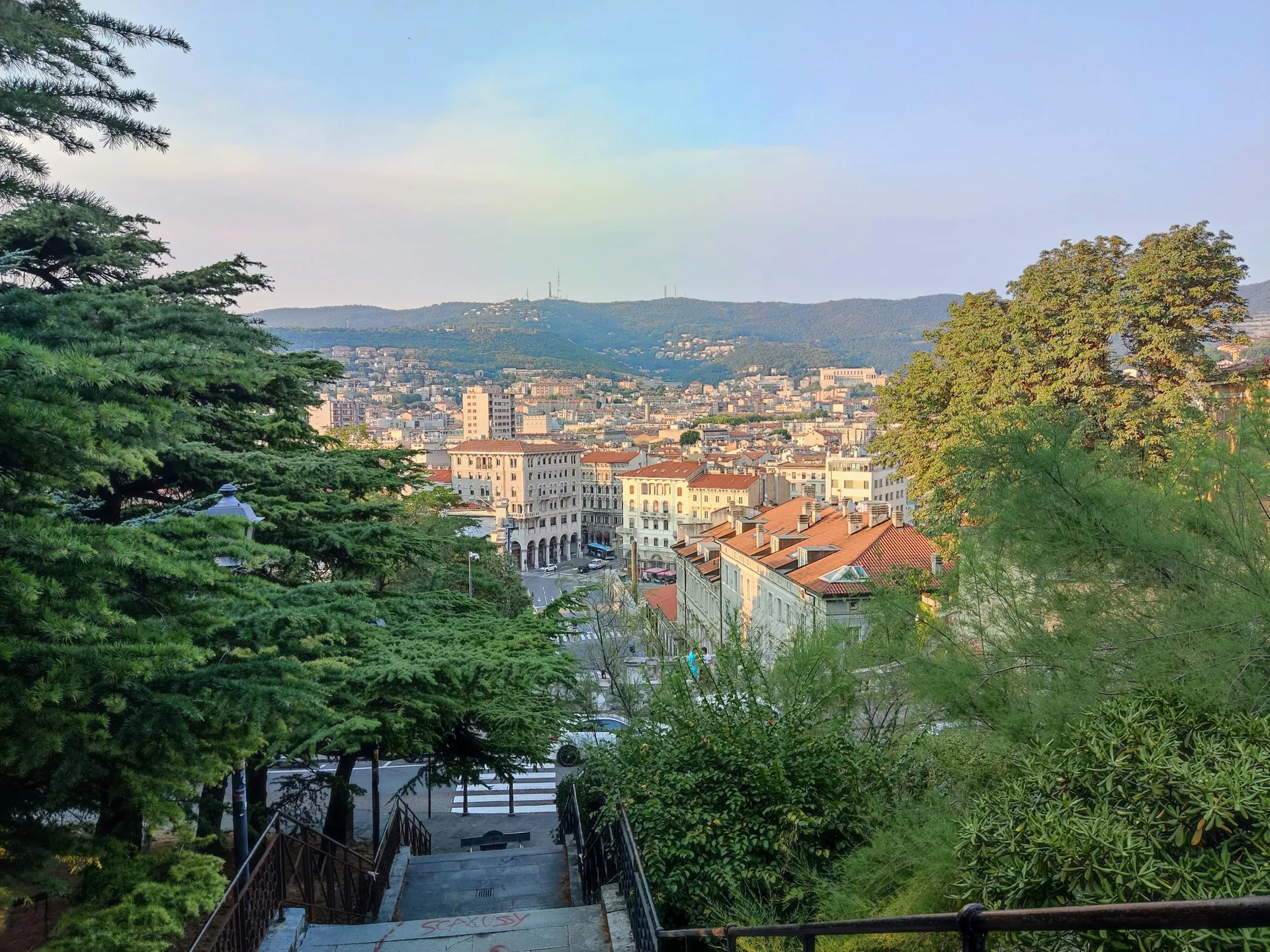
Trieste has a habit of absorbing its past rather than erasing it. The city has always been a borderland, caught between the Latin world, the Slavic interior, and the Germanic north. The stones gathered in this garden reflect that friction. They are physical fragments of Roman Tergeste, medieval communes, and the sprawling Habsburg empire. I like to come here after spending a few hours reading at Caffè San Marco. The transition from the caffeinated chatter of the city to the stillness of the lapidary garden clears the mind.
Historical Origins and Winckelmann’s Legacy
The garden did not always look like this. In the early 19th century, the grounds surrounding the San Giusto hill were scattered with unorganized antiquities. Construction projects in the lower city constantly unearthed Roman pillars, altars, and funerary stelae. Civic leaders realized they needed a designated space to protect these artifacts from being repurposed as building materials or simply discarded. The visionary behind the Orto Lapidario was Domenico Rossetti, a prominent local scholar and magistrate. Rossetti wanted to create a civic sanctuary for the city’s heritage.
The project was formally established in the 1830s. The site was built over an old cemetery area, transforming a place of modern mourning into a landscape of historical reflection. Rossetti had another powerful motivation for establishing this garden. He wanted to honor Johann Joachim Winckelmann. Winckelmann is widely recognized as the father of modern art history and scientific archaeology. He changed how the European intellectual class understood classical antiquity.
Winckelmann’s connection to Trieste is tragic. In June 1768, he arrived in the city incognito, waiting for a ship to Ancona. He stayed at the Locanda Grande, a prominent inn near the waterfront. He made the fatal mistake of showing some rare gold coins to a fellow traveler named Francesco Arcangeli. Arcangeli, a convicted thief, stabbed Winckelmann to death in his hotel room. The murder shocked Europe. Winckelmann was initially buried in an unmarked grave in the churchyard of the San Giusto Cathedral. Rossetti found this unacceptable. He commissioned a neoclassical cenotaph to anchor the new lapidary garden, ensuring Winckelmann’s legacy had a permanent physical presence in Trieste.
The Roman Heritage
The left side of the garden’s narrative belongs heavily to the Romans. Tergeste was a crucial port and military outpost for the Roman Empire, guarding the eastern approaches to Italy. The lapidary collection holds dozens of funerary stelae and stone urns recovered from the ancient necropolises that once lined the roads out of the settlement.
You can read the names of magistrates, legionaries, and freed slaves carved into the stone. The lettering is precise. These inscriptions are primary documents. They detail marriage alliances, military campaigns, and the daily commerce of a frontier town. Some stones carry dedications to Jupiter, Minerva, and local deities whose names have almost faded from memory.
Medieval and Renaissance Layers
The collection moves forward in time as you walk deeper into the terraced pathways. The Roman precision gives way to the heavier, more stylized architecure of the Middle Ages. You will find fragmented coats of arms belonging to noble families who controlled the city before it formally submitted to the Habsburgs in 1382.
There are gargoyles, broken capitals from demolished churches, and carved well-heads. These stones tell the story of a city that was constantly rebuilding itself. Earthquakes, fires, and sieges frequently leveled parts of Trieste. The rubble was saved and eventually brought up this hill. It is a physical timeline of civic survival.
The Architecture and The Winckelmann Cenotaph
The physical layout of the Orto Lapidario is intentional. It is designed to feel like a romantic, 19th-century antiquarian garden. Tall cypress trees provide shade, their dark green needles contrasting sharply with the pale Istrian stone. Vines crawl up the brick retaining walls. The artifacts are not locked behind glass. They are embedded into the walls or set upon low pedestals along the dirt and gravel paths. You are meant to walk close to them, to see the chisel marks and the erosion caused by centuries of rain.
The focal point of the garden is the Winckelmann Cenotaph. Housed within a small neoclassical temple structure, the monument demands quiet attention. Antonio Bosa, a sculptor who studied under Canova, crafted the piece. It depicts an allegorical figure of mourning alongside a portrait medallion of the slain scholar. The temple structure protects the delicate marble from the harsh coastal weather.
The Orto Lapidario does not demand your attention. It simply waits for you to slow down enough to notice the weight of the centuries resting in the grass.
Logistics and Practical Information
Visiting the garden requires a bit of practical planning. Because it is an open-air site attached to a larger municipal museum, access and hours are tied to the primary institution. The site is managed under the umbrella of the local cultural authority. You can verify current exhibition details and seasonal shifts in hours on the Trieste Cultura portal or the specific Musei Civici website.
| Practical Details | Information |
|---|---|
| Official Name | Orto Lapidario (Civico Museo di Storia ed Arte) |
| Address | Via della Cattedrale, 15, 34121 Trieste TS, Italy |
| Standard Admission | Free entry. |
| Accessibility | The garden has gravel paths, uneven stone, and terraced steps. It is difficult to navigate for those with severe mobility restrictions. |
| Opening Hours | Generally Wednesday to Sunday, 10:00 AM to 5:00 PM (or 6:00 PM during summer). Closed on Mondays and Tuesdays. |
Visitor Experience and Photography Tips
Timing matters when you visit the Orto Lapidario. The harsh midday sun flattens the texture of the stone. I prefer going mid-morning or late afternoon. The angled light catches the grooves of the Latin letters and casts long shadows across the grass. Photographers will find endless details here. Focus on the contrast between the organic shapes of the overgrown vines and the geometric precision of the Roman altars. There is a specific melancholy to this place when teh afternoon light begins to fail, turning the white stone a pale shade of violet.
The garden is only half of the experience. The adjacent Civico Museo di Storia ed Arte holds the delicate artifacts that cannot survive outdoors. Inside, you will find extensive collections of Roman glass, Egyptian antiquities, and prehistoric tools sourced from the Karst plateau. If you want to dive deeper into the logistical side of moving around the city’s museums, you can read more in our Practical Info guide.
If you prefer having the historical context explained to you rather than reading the faded placards, it is worth organizing a Private Trieste Sightseeing Tour. A local guide can point out the specific inscriptions that relate to the original layout of the Roman port, connecting the isolated stones in the garden to the modern streets below.
Nearby Attractions
You are already at the highest point of the old city when you visit the garden. It makes geographical sense to explore the rest of the San Giusto hill before walking back down to the sea. The San Giusto Cathedral is located just a few steps away. Its asymmetrical facade is the result of two distinct medieval churches being merged into one building in the 14th century. The interior holds Byzantine-style mosaics that glow faintly in the dim light.
Right next to the cathedral is the San Giusto Castle. The fortress was built by the Austrians over a period of two centuries to defend the city against the Venetians. Walking the heavy stone ramparts gives you an unobstructed view of the entire Gulf of Trieste. If you are hungry after exploring the hill, skip the tourist cafes near the cathedral. Walk down into the Cavana district, or better yet, drive up into the Karst hills to find a local osmiza for local wine and cured meats. You can find more recommendations on how to structure your day in our Places to Visit section.
The Orto Lapidario is a quiet reminder that Trieste is an accumulation of centuries. The empires that built these monuments collapsed. The families who carved their coats of arms into the stone disappeared. Yet, the stone remains, quietly curated on a windy hill above the Adriatic.