
Chiesa Greco-Ortodossa di San Nicolò
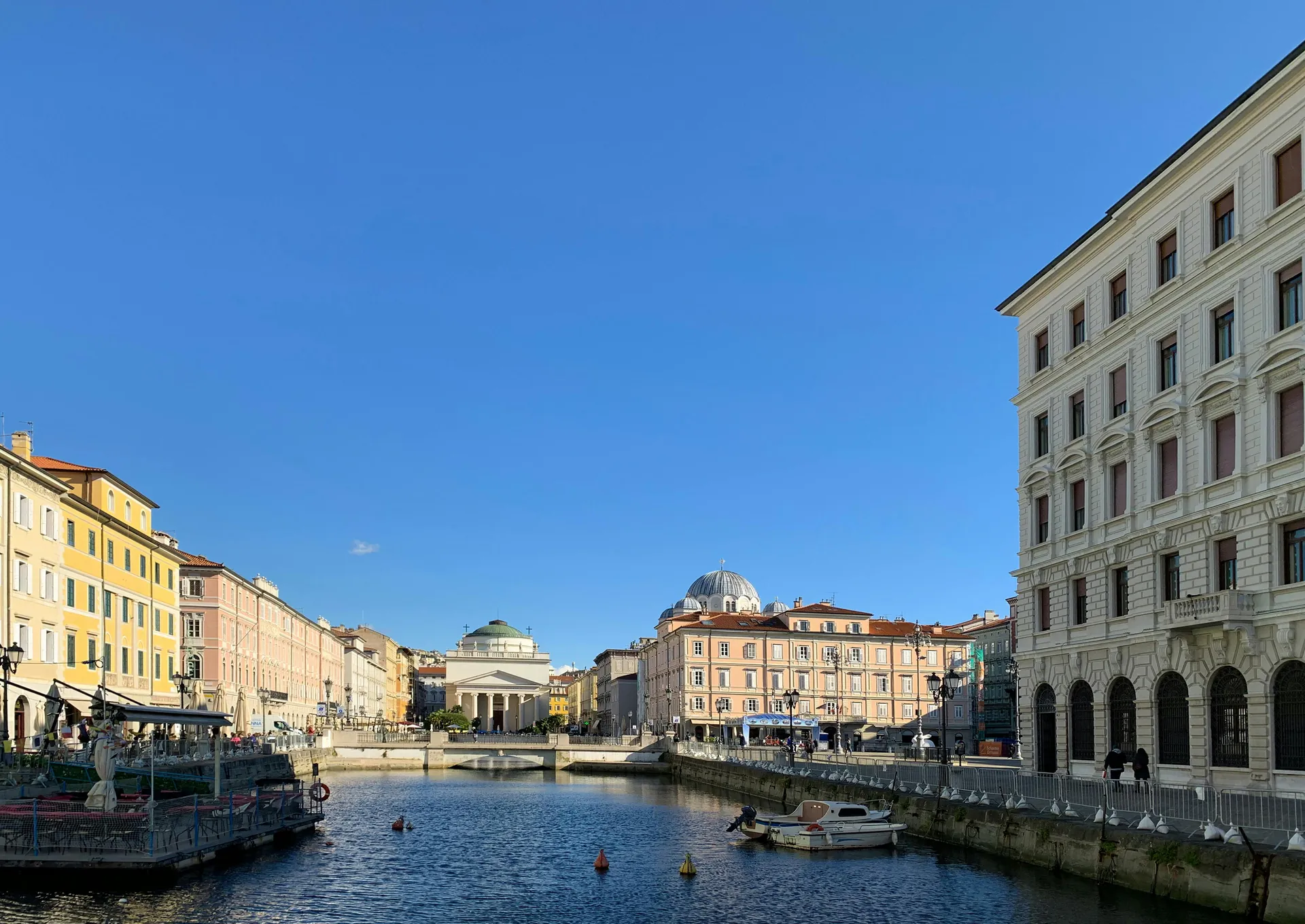
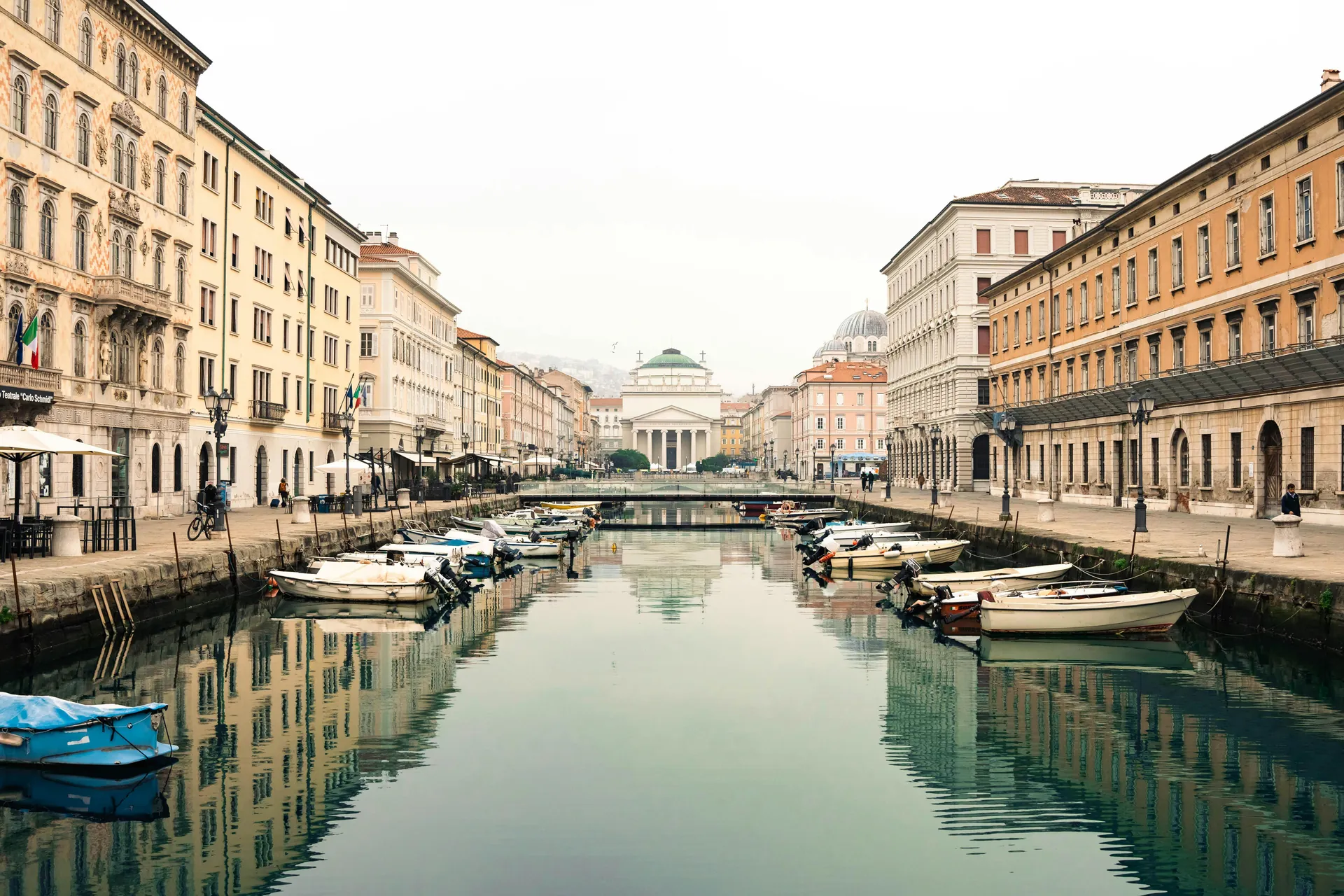
The water of the Canal Grande reflects a strictly ordered architectural grid. This is a remnant of Austro-Hungarian planning that defines the Borgo Teresiano. At the edge of this geometric precision is the Chiesa di San Nicolò dei Greci. This is not just a building. It is a physical manifestation of a merchant class that shaped the economic reality of Trieste. Whenever I walk down Via San Nicolò, the scent of roasted coffee beans from nearby cafes mixes with the salty air of the Adriatic. It is a daily reminder of the city’s complex maritime heritage. The church anchors this street, drawing the eye upward with its austere white stone and symmetrical design.
The Edict of Tolerance and a New Merchant Class
The 18th century brought a specific kind of wealth to Trieste. Emperor Charles VI had declared the city a free port in 1719. Later, Emperor Joseph II issued the Patent of Toleration in 1781. This decree allowed non-Catholic Christians to practice their faith openly and build their own places of worship. The policy transformed our port, drawing merchants from across the Mediterranean basin. The Greek community arrived with significant capital and an intense desire to establish their spiritual roots in a foreign land. They came primarily from Chios, Smyrna, and the Peloponnese.
The original church was built between 1784 and 1787. Later, between 1819 and 1821, these merchant families commissioned Matteo Pertsch to redesign the church’s facade to reflect their economic weight. Pertsch studied in Milan and was heavily influenced by the rigorous structural logic of Piermarini. His balanced approach perfectly suited the sensibilities of the wealthy shipping magnates who funded the project. They wanted a structure that communicated permanence.
The Greek merchants did not just build a church. They financed maritime insurance companies and funded major public works, deeply embedding themselves in the civic identity of Trieste.
Architectural Duality
The Chiesa di San Nicolò dei Greci presents two entirely different faces to the world. The exterior relies on restraint and mathematical proportion, while the interior embraces sensory overload and Eastern mysticism.
The Neoclassical Exterior
The facade is a study in restraint. Pilasters frame the main entrance, supporting a simple triangular pediment. Two bell towers rise above the roofline, creating a distinct silhouette against the sky. The white stone demands attention without relying on excessive ornamentation. When the fierce Bora wind sweeps through the city, the structure feels entirely immovable. It is an architecture designed to withstand both time and the elements.
The Byzantine Interior
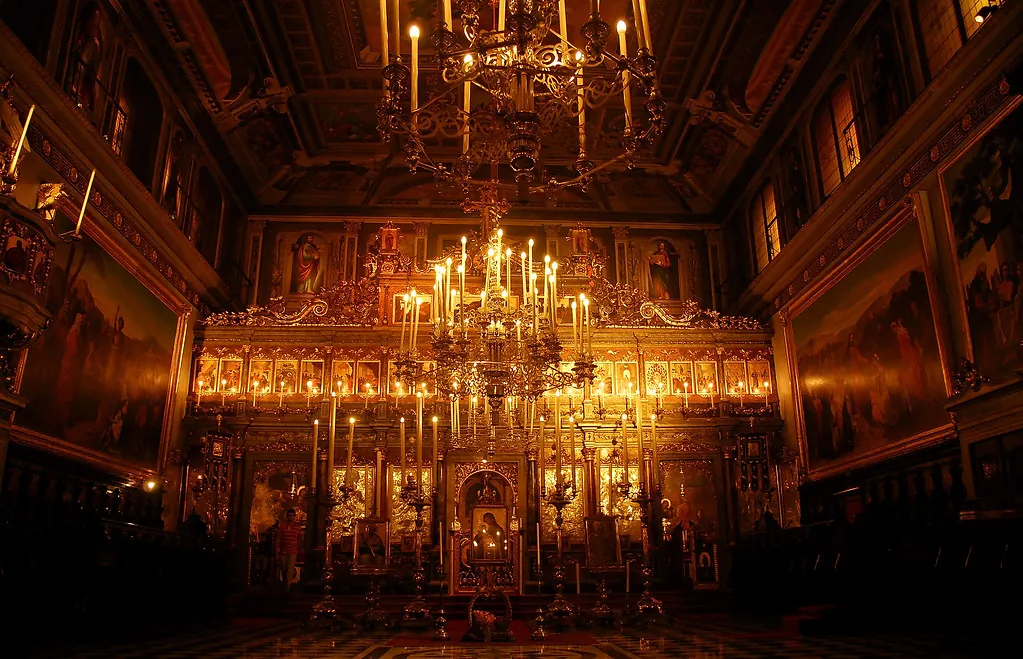
Crossing the threshold reveals an entirely different aesthetic. The iconostasis dominates the space. This intricately carved wooden screen separates the nave from the sanctuary, dripping with gold leaf and supporting icons brought directly from the East. Many of these paintings are covered in silver and gold rizas. The air is heavy with the scent of old beeswax and frankincense, creating a space defined by centuries of unbroken ritual.
The Greek Influence on Trieste
It is impossible to separate the history of this building from the broader economic history of the city. The families who worshipped here were among the prominent investors who contributed alongside the founders of Assicurazioni Generali and the Lloyd Austriaco. Their influence went far beyond spirituality. The church became the absolute anchor for the community they belonged to. Many visitors ask why Trieste is famous, often expecting answers about literature or the Hapsburg empire. The reality is that Trieste is famous because it was a laboratory of multicultural commerce. The Greek community was central to that experiment.
Today, the church remains the focal point for the Orthodox faith in the city. While the original merchant families have assimilated or moved on, the spiritual life of the parish continues. If you want to understand the local history in greater detail, booking a Trieste Walking Tour with Audio and Written Guide by a Local offers excellent context for how these different immigrant groups shaped the urban landscape.
Visitor Experience and Etiquette
Entering the sanctuary requires a shift in demeanor. The silence inside is heavy. You will often see locals pausing for a moment of quiet reflection before heading out into teh fierce winds of winter or the intense summer heat. This is an active place of worship. The liturgy is still celebrated here, and the space commands respect.
Put away your flash and keep your phone silent. The light filtering through the high windows provides all the illumination you need for a thoughtful photograph. Observe the details of the silver rizas without disturbing the worshippers.
Elena Valli
Many travelers wonder if Trieste is a walkable city. It absolutely is. Navigating the grid of the Borgo Teresiano on foot is the only way to genuinely comprehend the urban planning of the era. You can easily walk from the Chiesa di San Nicolò to the nearby Sant’Antonio Taumaturgo. If you are organizing your morning, I recommend reading our Places to Visit guide to see how closely these sites neighbor each other. You can also review our Practical Info page for details on navigating the local bus system, though you will likely rely entirely on your feet in this district.
Practical Information
Planning a visit requires minimal effort, but timing is important. Mid-morning on weekdays is usually the best time to experience the architecture without interrupting a service. Afterward, you might find yourself craving a strong espresso and a slice of presnitz (a local pastry with Slavic and Austrian roots) at a nearby cafe.
| Category | Details |
|---|---|
| Opening Hours | Generally 10:00 AM – 12:30 PM and 3:30 PM – 6:00 PM (Subject to religious services) |
| Entry Fee | Free (Donations are highly encouraged for maintenance) |
| Dress Code | Modest attire required (shoulders and knees covered) |
| Accessibility | Ground level entry with a minor step at the main door. |
External Resources and Further Reading
To deepen your understanding of the region’s religious and cultural history, I recommend consulting the following official resources:
- Turismo FVG (Official Regional Tourism Board)
- Comunità Greco-Orientale di Trieste (Official Community Portal)
- Diocese of Trieste (For comparative historical context on local parishes)
The Chiesa Greco-Ortodossa di San Nicolò is a necessary stop for anyone interested in architecture and history. It forces you to look past the Italian exterior of the city and recognize the complex Mediterranean networks that built Trieste. When I sit at Caffè San Marco reviewing my notes on the city, I always return to the idea that Trieste is a city of arrivals. The Greek merchants arrived, they built, and they left an indelible mark on the stone of the Borgo Teresiano.