
Faro della Vittoria
A Sentinel Above the Gulf
The Faro della Vittoria is an inescapable silhouette against the Triestine sky. It stands high on the Gretta hill, casting a long, sweeping beam across the Adriatic Sea. For those arriving by water, it is the first greeting from a city defined by its relationship with the waves. For locals, it is a daily reminder of the complex, heavy history we carry. You often hear visitors ask what makes this city so special compared to the rest of Italy. The answer is usually found in our contradictions, and this lighthouse is a perfect example. It is both a working navigational aid and a solemn monument, built directly on top of the ruins of an enemy fort.

I always recommend visiting in the early morning. Most people in Italy wake up around 7:00 AM, and if you make your way up Strada del Friuli before the crowds begin their day, the morning light hitting the white stone is extraordinary. The structure rises 68 meters into the air, making it one of the tallest lighthouses in the world. Yet, its sheer height is only half the story. To understand this place, you have to look at what it sits upon and what it holds up.
History and Architectural Vision
The construction took place between 1923 and 1927 under the direction of Triestine architect Arduino Berlam. Following the brutal conclusion of World War I, the city was annexed to Italy. The government wanted a monument dedicated to the fallen Italian sailors, and Berlam envisioned something monumental. He decided to place his lighthouse directly on the stone foundations of the former Austro-Hungarian Fort Kressich. This is the exact kind of history Trieste is built on. A structure meant to celebrate Italian victory physically crushes the remnants of an Austrian defense post. If you are interested in exploring more of these layered historical sites, our guide to other historical monuments outlines the best routes through the city.
In Trieste, the past is never erased. It is simply built upon, layer by layer, stone by stone.
The base is heavy and imposing, clad in white stone from the nearby Orsera and Gabrie quarries. As your eyes move upward, the design becomes lighter, culminating in the lantern and the great bronze dome. Berlam worked closely with sculptor Giovanni Mayer to integrate massive symbolic statues into the architecture. You can read more about Berlam’s original sketches and the post-war architectural movement in the region via the official Friuli Venezia Giulia tourism board.
Symbolism and Engineering
The monument is defined by two massive sculptures. At the base stands the “Unknown Sailor,” an eight-meter stone figure staring out at the water. Below him rests the actual anchor from the torpedo boat Audace, the first Italian naval ship to enter the port of Trieste in 1918. At the very top is the Winged Victory. Crafted from embossed copper, she holds a torch in her left hand and a laurel branch in her right.
The engineering behind the monument is strictly practical. The light has a range of 30 to 35 nautical miles. The Marina Militare still operates the lantern today. Berlam used a heavy reinforced concrete core to support the immense weight of the stone cladding. The internal mechanism of the Winged Victory is particularly clever. The wings are designed to flex slightly, allowing the wind to pass through without tearing the copper apart.
The View and The Bora
You cannot talk about the Faro della Vittoria without talking about the Bora. This is our infamous katabatic wind that tears down from the mountains and slams into the gulf. The lighthouse is designed to withstand gusts exceeding 150 kilometers per hour. When the Bora blows hard, the top of the tower sways slightly. Local families tell stories of the lighthouse keeping watch during the worst winter storms, its beam cutting through the freezing rain. Looking out over teh edge of the Karst plateau from the viewing platform, you understand why the architect over-engineered the foundation.
The viewing platform opens up to a sweeping panorama. You can see the entire arc of the coastline, from the industrial cranes of the port to the white silhouette of Miramare Castle in the distance. On clear days, the view stretches across the water all the way to the Slovenian and Croatian coasts. You will notice a distinct lack of mosquitoes up here, a welcome relief thanks to the constant sea breeze and the high elevation. For the most accurate wind predictions before your climb, locals rely heavily on the regional meteorological observatory.
Visiting the Faro della Vittoria
Getting inside the lighthouse requires a bit of timing. It is not open every day. Access is generally restricted to weekends and specific seasonal windows, usually between April and October. Admission is normally free, but the regional heritage authority (ERPAC) controls the access schedule. You must check the official Faro della Vittoria portal for the most current opening hours before making the trek up the hill.
| Information | Details |
|---|---|
| Location | Strada del Friuli, 141, Trieste |
| Entry Fee | Usually Free (Check official updates) |
| Accessibility | No elevator for the final ascent. Many stairs. |
| Best Time to Visit | Late afternoon for sunset lighting. |
Practical Tips for Your Climb
If you are wondering whether Trieste is a walkable city, the answer is a qualified yes. The city center is flat, but the surrounding neighborhoods are steep. To reach the lighthouse without exhausting yourself, take Bus Line 42 or 44 from Piazza Oberdan. The Trieste Trasporti network is reliable, and you can find comprehensive ticket information on our public transport details page. If you decide to drive, be aware that parking along Strada del Friuli is extremely tight.
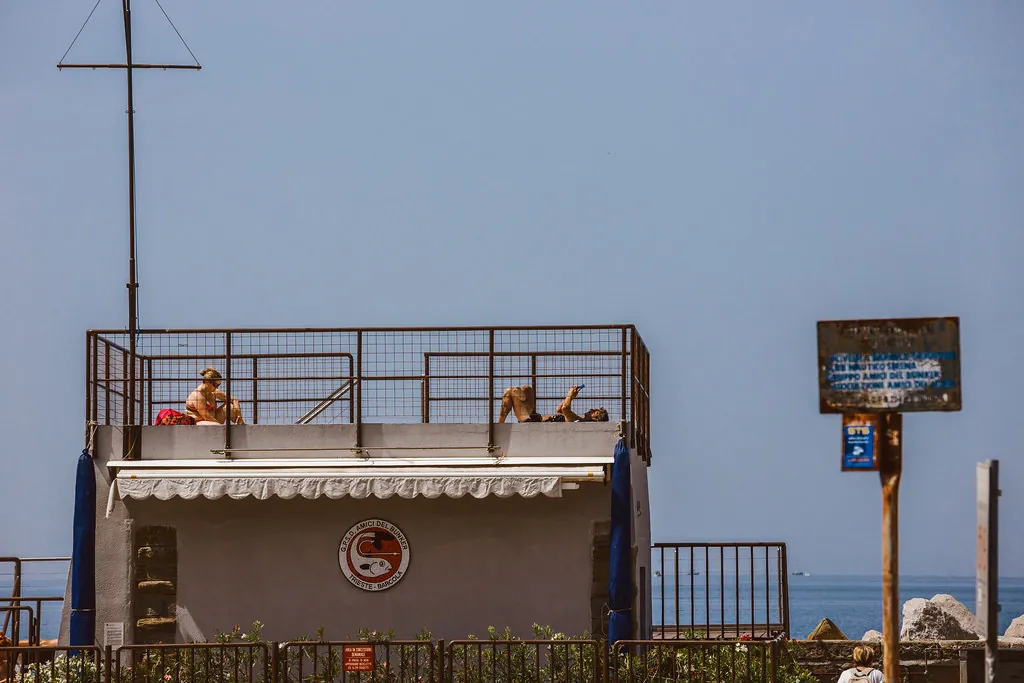
Wear flat, rubber-soled shoes. The stone steps inside the tower are smooth from decades of foot traffic, and there is no elevator for the final stretch to the viewing gallery. Once you finish your visit, I suggest walking back down toward the water. You will hit the Lungomare di Barcola, our long seaside promenade. It is a beautiful walk back toward the city center. Along the way, you can stop at a local bakery to try a slice of putizza, our traditional dense, nutty dessert. For travelers who want deeper context on these streets and the local food culture, booking a Trieste Walking Tour with Audio and Written Guide by a Local is a smart way to spend the rest of your afternoon. You can browse more options for your itinerary on our afternoon activities page.
The Faro della Vittoria stands independent from the busy cafes and the grand squares downtown. It demands a slight detour, a short bus ride, and a steep climb. But standing on that platform, feeling the wind pull at your coat while the light swings out over the dark water, gives you a proper sense of place. You see the city exactly as it is: wedged between the harsh limestone plateau and the deep waters of the Adriatic.