
Chiesa di San Silvestro
The Oldest Church in Trieste
The Bora wind has a particular way of moving through Trieste. It sweeps down from the Karst plateau with a sharp, unforgiving bite during the colder months. It strips the narrow streets of their warmth and forces people indoors. On these days, I usually sit inside Caffè San Marco with a dark espresso. Trieste is a city built on coffee and wind. Sometimes, an afternoon demands a different kind of silence away from the clinking cups and conversations. I walk up the steep incline of Via del Collegio in the Città Vecchia to visit the Chiesa di San Silvestro. It is the oldest standing church in our city. It is the physical anchor of our medieval history in a landscape otherwise dominated by grand, sweeping Habsburg architecture.
People frequently ask what is special about Trieste. The answer is usually buried underground. The city is essentially a vertical stack of former empires. San Silvestro is a perfect physical record of this history. The church has foundations dating back to the 11th century. Local archaeologists know the site sits directly over much older Roman structures from the ancient settlement of Tergeste. You can see the rough transition from ancient imperial rubble to organized Christian worship in the unadorned walls. Early builders used stones from the ruined Roman temples to construct the nave. It is a practical method of construction that defined the Middle Ages in this border region.
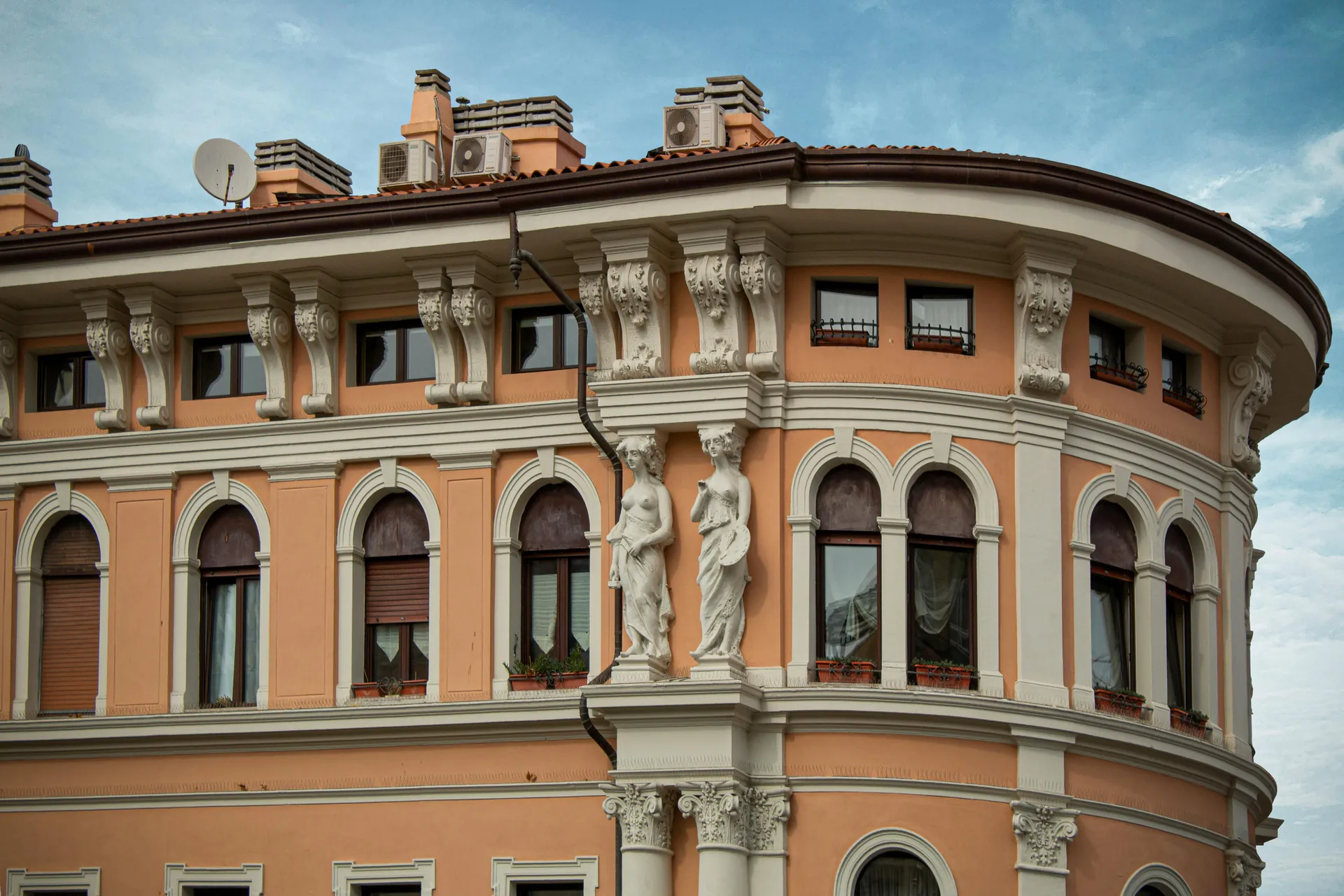
Romanesque Architecture and Karst Stone
The facade is strictly Romanesque. It lacks the elaborate statues or excessive ornamentation found in other Italian regions. A single, elegant rose window sits above a heavy stone portal. The bell tower next to the church has a distinctly military appearance. It was a defense tower for the old city walls before the religious community claimed it for their own use. This highly functional approach to building makes total sense here. You do not find the dramatic marble flourishes typical of southern Italy. You get thick limestone blocks designed to withstand the fierce local weather. The Karst stone is pale and highly porous. It absorbs the winter rain and reflects the harsh summer sunlight with equal intensity.
A church of this age in other Italian cities is usually covered in gold leaf. Here, the door is propped open, the entry is free, and you are entirely alone with the bare stone walls.
Visitors constantly ask if Venice or Trieste is better. It is an impossible comparison. Venice is a floating museum of immense wealth and Byzantine art. Trieste is a working port city with a heavy literary past. Venice demands your awe. Trieste invites you to sit down, read a book by Italo Svevo or James Joyce, and watch the cargo ships on the horizon. San Silvestro is a perfect example of this difference. You enter the space on your own terms without crowds or ticket booths.
A Shift in Faith
The history of the church took a sharp turn in the 18th century. In 1785, the building was sold to the Helvetic Evangelical community at a public auction following the secularizing reforms of the Austrian Emperor Joseph II. This Protestant group, later joined by the Waldensians, maintains the property today. Their intervention saved the building from demolition during the heavy urban restructuring of the period. The presence of a prominent Protestant church in an Italian city highlights the unique religious tolerance of Trieste. Under the Austro-Hungarian Empire, the city was a free port. It attracted merchants from Greece, Serbia, and Switzerland. You can read extensive details about their community initiatives on the official Waldensian Church website.
The Minimalist Interior
Protestant theology historically favors spaces free from visual distraction. The interior of San Silvestro is exceptionally austere. There are no gilded altars, crying statues, or chaotic frescoes competing for your attention. The stone walls remain mostly bare, though they preserve fragmentary remains of 14th-century frescoes. The natural light filtering through the rose window casts sharp, geometric shadows across the wooden pews. It is a deeply calming environment. It is the sort of quiet sanctuary you end up walking into. You sit down, listen to the wind rattling the thick glass, and let your thoughts settle.
Walking the Città Vecchia
Walking through the Città Vecchia requires some physical stamina. The cobblestones are uneven. The alleys are tight and winding. The shadows are long. It is highly atmospheric. Along the way, you might catch the scent of typical local cooking. People wonder what food Trieste is known for. It is not standard Italian fare. You will smell jota, a thick soup made of sour turnip, beans, and smoked pork. It is a heavy, comforting dish designed for cold days. The culinary landscape is much closer to Vienna or Ljubljana than to Rome. The city sits only a few miles from the Slovenian border. Tourists often ask if Trieste is more Italian or Slovenian. The culture is a total blend of Latin, Slavic, and Germanic influences.
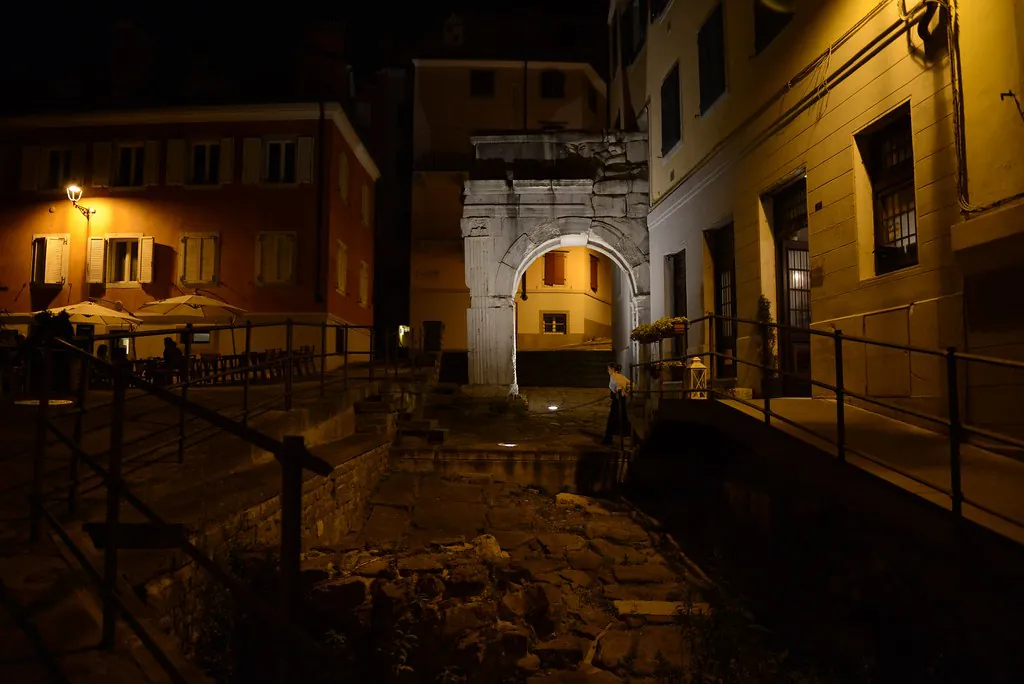
The immediate area around the church is known as Piazza di San Silvestro. It is a small, irregular square paved with large sandstone slabs. In the summer, the heat radiates off the ground. In the winter, the dampness settles into the stone. Just a short walk from the front doors, you can find the Arco di Riccardo. This is an original Roman gate built directly into the fabric of a modern residential building. Legend claims King Richard the Lionheart passed through it on his return from the Crusades. The proximity of the Roman gate to the medieval church is the perfect illustration of how Trieste recycles its own architecture. Buildings do not die here. They are absorbed into the next generation of the city.
Practical Information for Visitors
Trieste is a walkable city if you pace yourself. The climb up to the church requires comfortable shoes. You can easily reach the building on foot from the main squares near the sea.
| Visitor Detail | Information |
|---|---|
| Address | Piazza San Silvestro, 1, 34121 Trieste TS, Italy |
| Admission | Free. The parish accepts small donations for structural maintenance. |
| Opening Hours | Variable. The church is frequently open from mid-morning to early afternoon. It is closed to tourists during Sunday services. |
| Water Access | Tourists often ask if you can drink tap water in Trieste. The local water is perfectly safe and delicious. Fill your bottle at the nearby public fountains in the piazzas. |
Local Tip: Visit the church around 11:00 AM on a sunny day. The sunlight hits the rose window at the perfect angle, illuminating the otherwise dark stone interior.
Context and Connections
Most tourists march straight past San Silvestro on their way to the Cathedral of San Giusto at the top of the hill. The main cathedral is undeniably magnificent. I personally prefer the unassuming grace of this smaller parish. It remains a quiet secret in a city that is rapidly gaining international attention. People often wonder if Trieste is worth going to. You have to spend time in these silent, medieval pockets to fully understand the appeal. The grand waterfront of Piazza Unità d’Italia is beautiful, but the Città Vecchia is the actual heart of the city.
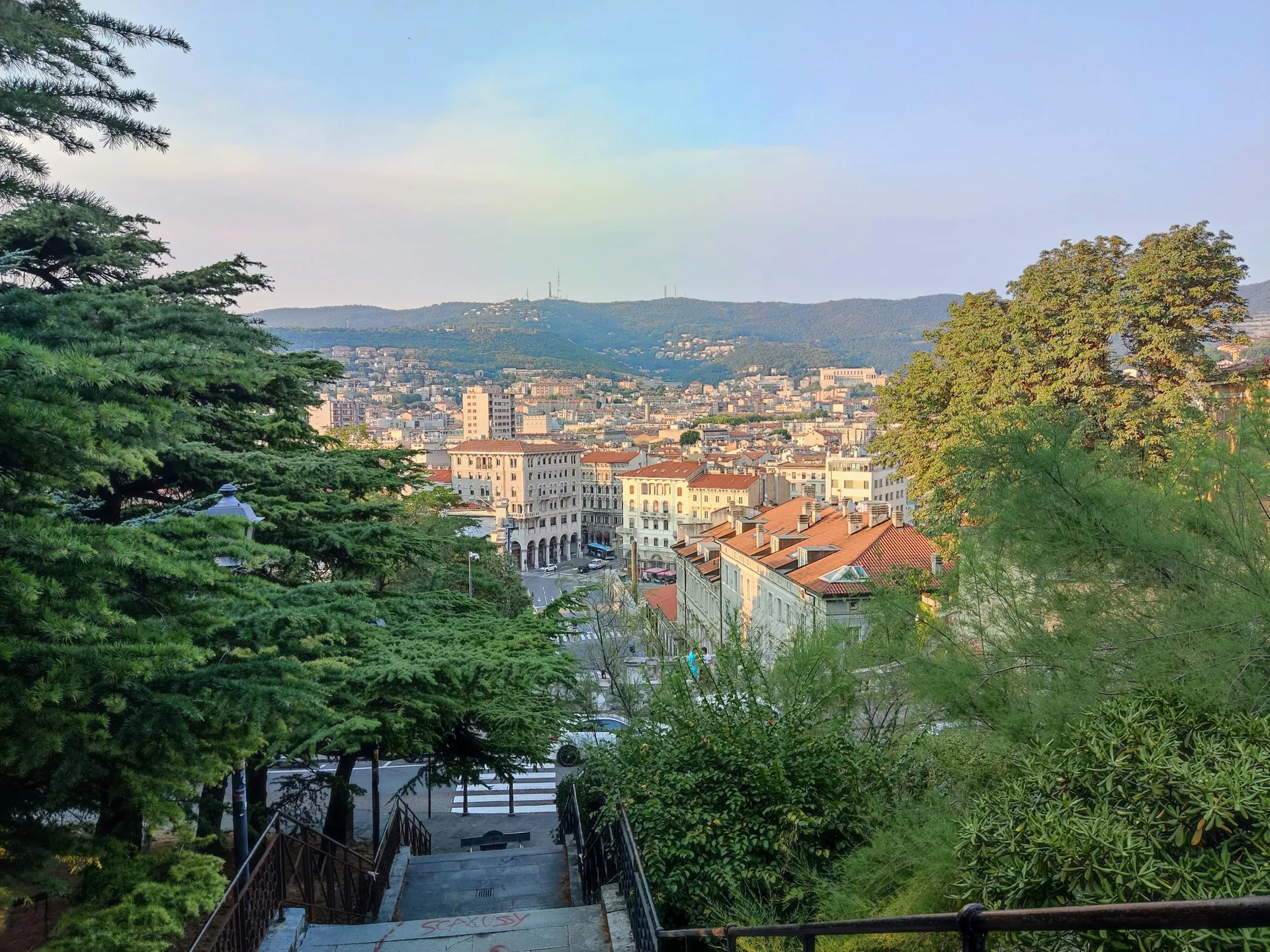
After leaving the church, you can walk down the hill to see the Roman Theatre or continue upward to the San Giusto complex. If you want a structured overview of the area, you can easily book a local walking tour to grasp the historical context of the neighborhood. Later in the evening, you might venture out to the Karst plateau to find a local osmiza. These are traditional farmhouses where families sell their own Vitovska wine and cured meats directly to the public. It is a tradition dating back to a decree by Emperor Joseph II.
Travelers regularly ask what the best time of year to visit Trieste is. The shoulder seasons are ideal. October brings crisp air and the massive Barcolana sailing regatta. May has mild temperatures perfect for climbing the steep hills of the Città Vecchia without overheating. People also wonder how cheap Trieste is compared to other Italian destinations. The city is significantly more affordable than Rome, Milan, or Florence. You can still buy a world-class espresso for under two euros at a standing bar. A hearty plate of jota at a neighborhood buffet will cost a fraction of a tourist meal in Venice. Your travel budget stretches further here, allowing you to focus on the experience rather than the expense.
The Discover Trieste tourism board has excellent digital maps for planning your walking routes around the old town. You can also consult the Friuli Venezia Giulia government portal for comprehensive records on regional heritage sites. The Trieste city portal contains vast archives detailing the demographic changes of the city over the centuries. Standing in Piazza di San Silvestro, you can feel teh weight of the centuries. It is a rare piece of the Middle Ages that survived the aggressive modernization of the port. It is a place that asks for nothing but your quiet attention.