
Arco di Riccardo
The Silent Witness of Roman Tergeste
You can walk past the Arco di Riccardo a dozen times before you truly see it. Trieste is a city that constantly plays with your expectations. Visitors arrive expecting the grand neoclassical facades built by the Habsburgs. They find Austrian-style coffeehouses and massive squares opening directly onto the Adriatic Sea. Right in the middle of the old town, squeezed between unremarkable residential buildings, is a massive gate from antiquity. I usually grab a capo in b—our local macchiato served in a small glass—at a nearby cafe before wandering up the hill to this spot. The arch is one of the oldest Roman structures in the city. It dates back to the first century BC during the reign of Augustus. It is a working part of the streetscape. It sits out in the open rather than behind museum glass. This is the exact kind of ancient infrastructure we walk around in.
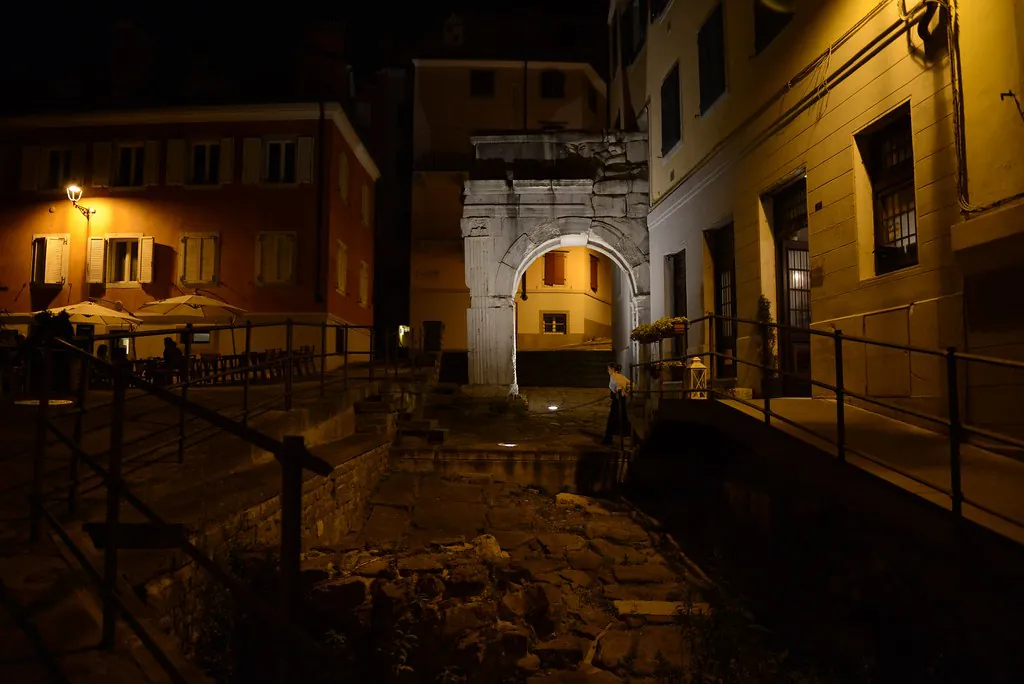
Many travelers ask if Trieste is a walkable city. The historic center is highly compact and designed for pedestrians. The streets of the Città Vecchia (Old Town) wind up the San Giusto hill in a tight network of alleys. The Arco di Riccardo imediately grounds you in the ancient Roman colony of Tergeste. You leave the nineteenth-century grid behind and enter a much older urban logic. The arch stands in Piazzetta Barbacan. The ground is paved with traditional masegni stones. The monument is built directly into the side of an adjoining apartment block. You can see modern windows just inches from two-thousand-year-old masonry.
The Arco di Riccardo does not sit behind velvet ropes. It is part of the daily commute for the residents of the Città Vecchia.
Unpacking the Name and Architecture
The structure is 7.2 meters high and 5.3 meters wide. It was a gate in the Roman city walls. Historians believe it was a monumental entrance leading toward the ancient forum. The aesthetic is austere and functional. The stone blocks show the heavy wear of two millennia of sea air and rain. The relentless Bora wind has also smoothed the edges. The gate lacks the ornate friezes found on imperial triumphal arches in Rome. It is a civic structure meant to control access and project authority over the newly established port.
The name carries a persistent local myth. Generations of Triestini grew up hearing that King Richard the Lionheart was imprisoned right here. The legend claims he was captured near the city upon his return from the Third Crusade in 1192. It is a satisfying story. The English king was indeed shipwrecked in the upper Adriatic. The truth is far more linguistic. Experts at the [Trieste Roman Heritage Board] agree that the word “Riccardo” is a corruption of the Latin Arco di Cardo. Roman urban planning relied on a grid system. The cardo maximus was the primary north-south street of the settlement. The arch straddled this exact road. The name evolved organically as the Latin language fractured into regional dialects over the centuries.
The Middle Ages
The arch survived the fall of the empire by being useful. Medieval city planners integrated the heavy Roman masonry directly into the new defensive walls. This pragmatic reuse saved the stone from being quarried for other building projects. The arch became a fortified threshold. It protected the citizens during an era of constant territorial disputes with the neighboring Republic of Venice. Its survival is a direct result of its strategic location on the slope.
Piazzetta Barbacan
Today, the arch defines Piazzetta Barbacan. The square is small and intimate. When the fierce Bora wind sweeps down from the Karst plateau, this sheltered pocket offers a rare quiet space. The square is entirely pedestrianized. It feels miles away from the wide boulevards near the sea. Locals gather here in the evenings before heading up into the hills to find an osmiza for local wine and cured meats.
Trieste in the Wider Regional Context
The identity of Trieste is deeply tied to its geography. People often wonder if Trieste is more Italian or Slovenian. The city sits right on the border. It was the primary seaport for the Austro-Hungarian Empire for centuries. The culture is a distinct blend of Latin and Slavic influences, with a heavy Germanic undercurrent. You hear Slovenian spoken in the cafes just as often as the local Triestino dialect. The Arco di Riccardo is a physical marker of the Latin roots in this border region.
Visitors frequently ask if Venice or Trieste is better for a holiday. The two cities serve entirely different purposes. Venice is an unparalleled artistic masterpiece dealing with immense crowd management issues. Trieste is a living, functional port city. It is cheaper, quieter, and deeply intellectual. You can stand in front of the Arco di Riccardo for an hour and maybe see three other tourists. The lack of crowds allows you to absorb the history at your own pace.
Skip the crowded tourist corridors of the Veneto. Trieste offers ancient history alongside world-class coffee, with plenty of room to breathe.
Food in Trieste reflects this borderland reality. After exploring the Roman ruins, you will not find the typical Tuscan or Neapolitan fare. The signature dishes are heavy and comforting. You must try jota, a thick soup made from sour turnip, beans, and pork. We also eat a lot of strucolo de pomi, which is our baked version of apple strudel. The culinary scene is a direct result of the city’s complex political past. You can dive into our local food culture on a Trieste Unique Food Tour with Local Flavors.
Navigating the Old Town and Roman Heritage
The Arco di Riccardo is part of a broader historical route. It takes about five minutes to walk from the arch to the Roman Theatre. The theatre was uncovered in the 1930s when Mussolini ordered the demolition of medieval houses to expose the ancient ruins. The theater is much larger than the arch. It once held up to 6,000 spectators facing the sea. A slightly longer uphill route from the arch brings you to the San Giusto Cathedral and Castle. The cathedral itself is built on top of a Roman temple. The floor inside still has exposed mosaics from the original Roman structure.
Early morning offers a soft, diffuse light that highlights the deep grooves in the stone of the arch. Late afternoon brings long shadows across the piazzetta. You can walk right up to the monument. There are no tickets to buy. It is an open-air site accessible at all hours. For official maintenance updates or historical timelines, the [City of Trieste Official Site] maintains public records on the preservation efforts. The [Turismo FVG portal] is also an excellent resource for mapping out the wider Roman footprint across the region.
Visitor Logistics
| Feature | Details |
|---|---|
| Entry Fee | Free (Public Monument) |
| Accessibility | Open 24/7 (Outdoor) |
| Location | Piazzetta Barbacan, Città Vecchia |
| Nearby Landmarks | Roman Theatre, San Giusto |
Trieste is well connected for travelers extending their trips. It is easy to visit Slovenia from Trieste. The border is just a few kilometers away. Many people take day trips to the Slovenian coast or the famous Postojna Cave. The Croatian border is also very close, about a forty-minute drive to the south. You can explore our curated list of places to visit for more detailed neighborhood guides or check our practical info page for regional transport schedules. If you prefer structured guidance on the ground, a Walking Tour with a Local Guide is a highly efficient way to navigate the steep streets and historical layers.
Timing Your Visit to the Città Vecchia
The best time of year to visit Trieste is late spring or early autumn. The summer heat is intense. The stone alleys trap the humidity. There are mosquitoes in Trieste during July and August, especially near the coastal areas and the canals. September brings cooler evenings and clear skies. The coldest month in Trieste is January. The Bora wind hits its peak speeds during the winter. It howls through the narrow streets around the Arco di Riccardo. Walking up the San Giusto hill in a winter storm is a physical challenge.
There are unspoken rules in Italy regarding the rhythm of the day. Most people wake up in Italy around seven in the morning. The cafes are busy with locals taking quick espressos at the counter. Trieste has its own coffee vocabulary. If you want an espresso in a glass, you ask for a nero in b. The city operates on a slower schedule than Milan. Shops close in the early afternoon for a long lunch. The streets around Piazzetta Barbacan are very quiet between one and four o’clock. This quiet window is an excellent time to photograph the arch.
After visiting the arch, you will likely sit down for a meal at a nearby trattoria. Travelers frequently ask if it is rude not to tip in Italy. Tipping is not mandatory. Waiters receive a standard monthly salary. A service charge, called coperto, is usually added to the bill to cover bread and table settings. You can leave a few extra euros if the service is exceptional. You should also remember the golden rule of Italian dining. You never order a cappuccino after a meal. You order an espresso. If you eat long pasta, you twirl it with your fork. You never cut it with a knife.
Local Culture and Language
If you listen to the locals in Piazzetta Barbacan, you will notice the specific pronunciation. Italians say “Tree-es-te” with three distinct syllables. The accent is on the second syllable. The local dialect shortens many words and drops vowels, but the name of the city remains sharp. The city is a popular filming location for international movies. The architecture in the lower town is grand and versatile. Directors often use those streets to double for Paris or Vienna. The area around the Arco di Riccardo is too specific and ancient to fake. It always plays itself on screen.
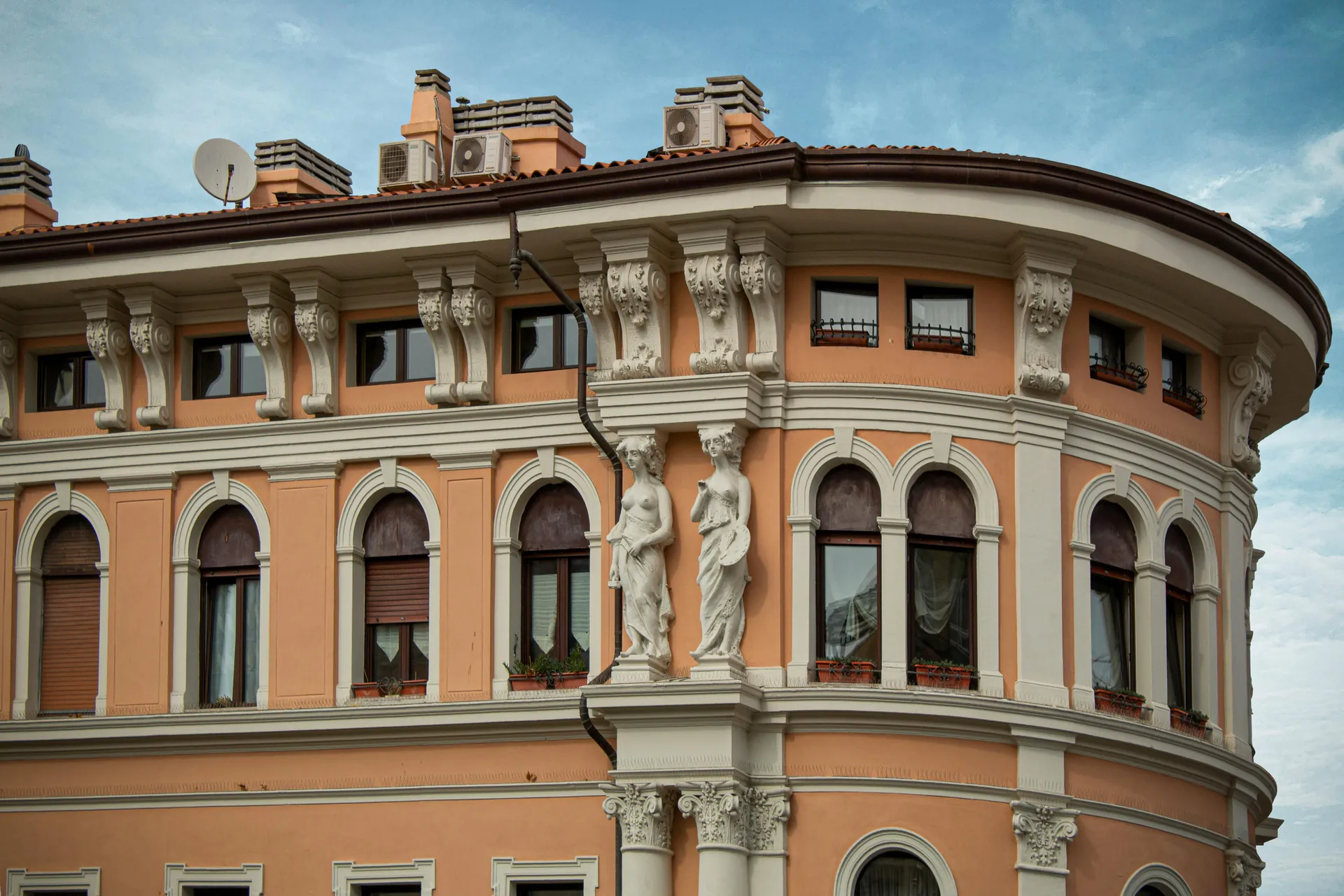
The history of Trieste is defined by its time under the Habsburg monarchy. The city was a free port from the eighteenth century until the end of World War I. It was the maritime capital of the Austrian Empire. The architecture in the lower city is a direct result of this era. You see grand palaces that resemble Vienna rather than Rome. The Arco di Riccardo is a sharp physical contrast to that imperial history. It pulls you back to the origins of the settlement.
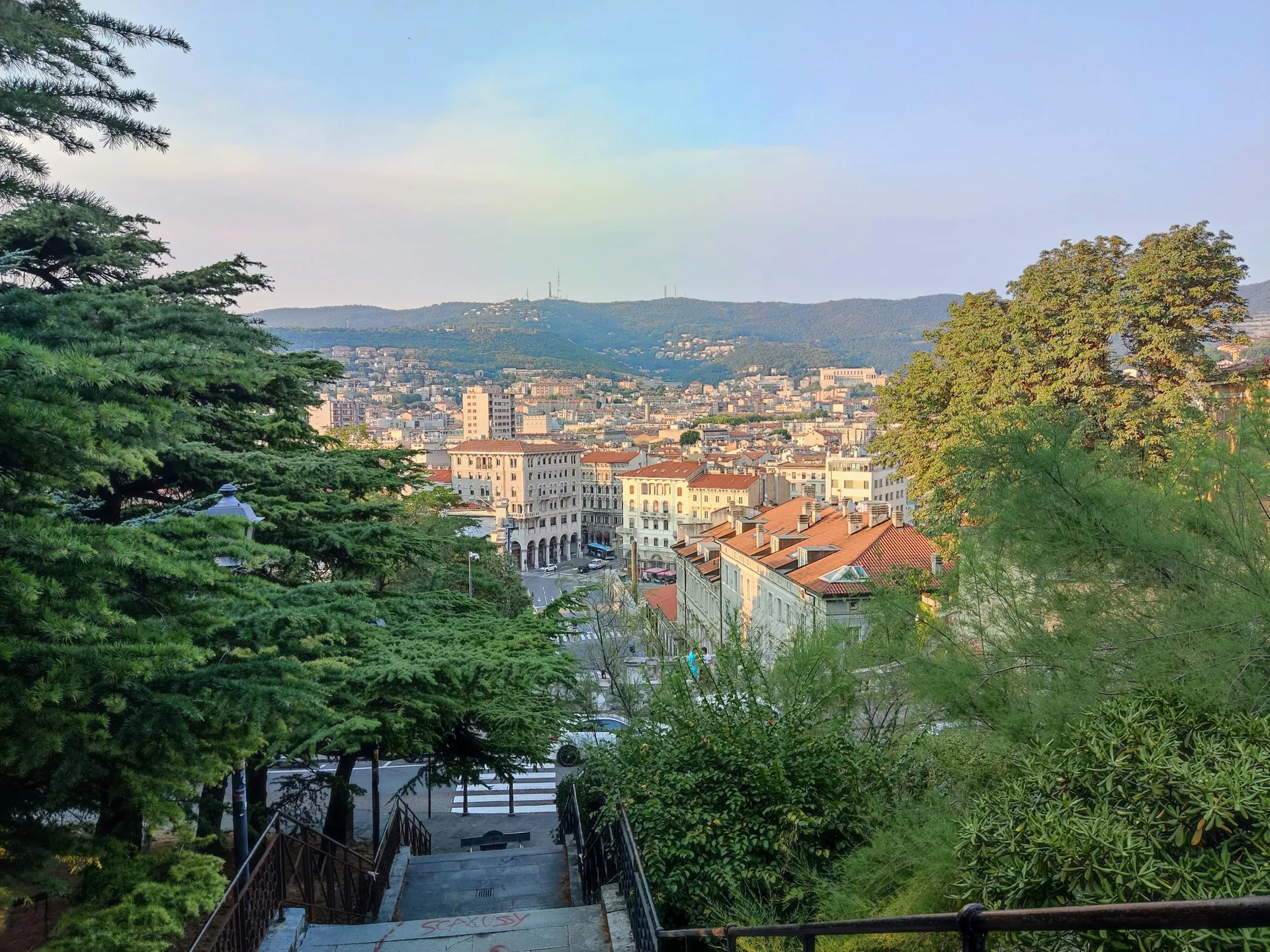
The Romans fortified the hill of San Giusto to control the sea trade routes. They established Tergeste as a strategic military and commercial outpost. The arch was a primary node in that defensive network. It is fascinating to see how the city grew down the hill over the centuries. The medieval town clung to the slopes. The modern city expanded onto reclaimed land near the water. The arch remains anchored in its original spot on the hill.